
Pic de Bure (2709 m), the high point of the Dévoluy, by the wild route up the Combe d'Aurouze and Combe de Mai from Montmaur. 14.6 km, 1384 m of ascent much of it very steep, early-season snow that calls for crampons and ice axe, and the radio observatory on the summit plateau. A proper mountain day, far from the crowds.
Pic de Bure is the roof of the Dévoluy: 2709 m, a vast limestone plateau suspended above the Southern Alps. Most people climb it by the tourist route, on the plateau side. We chose the other flank: the Combe d’Aurouze and the Combe de Mai, from Montmaur. Steeper, wilder, and just about deserted.
I was with Thibault again. After the Col des Aiguilles two days earlier, we clearly moved up a category: 1384 m of ascent, most of it swallowed in barely 4.5 km. Which is to say it goes straight up. For only his second hike, hats off, because this was no warm-up.
The wild flank, and the heat
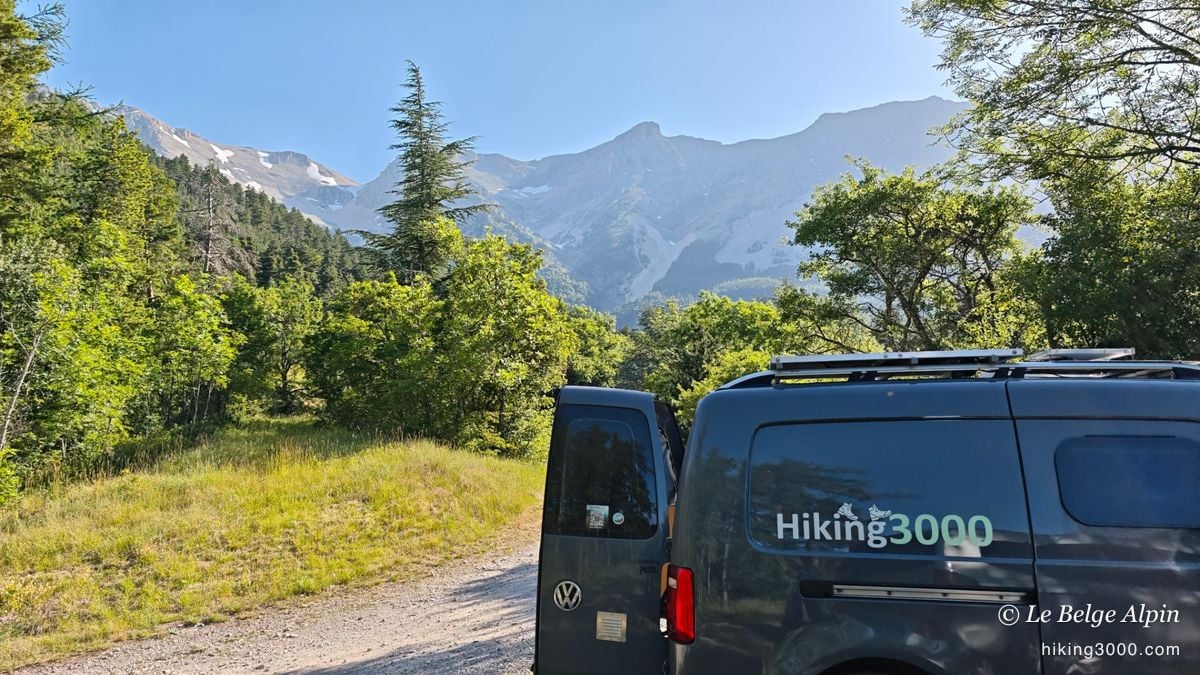
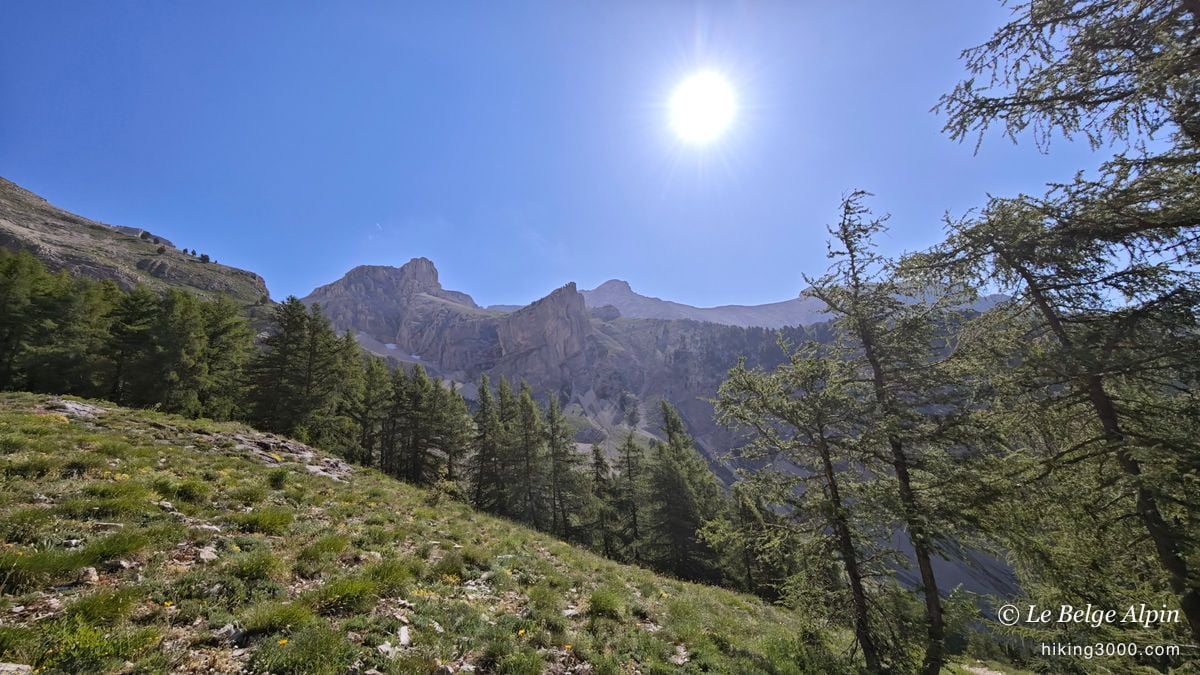
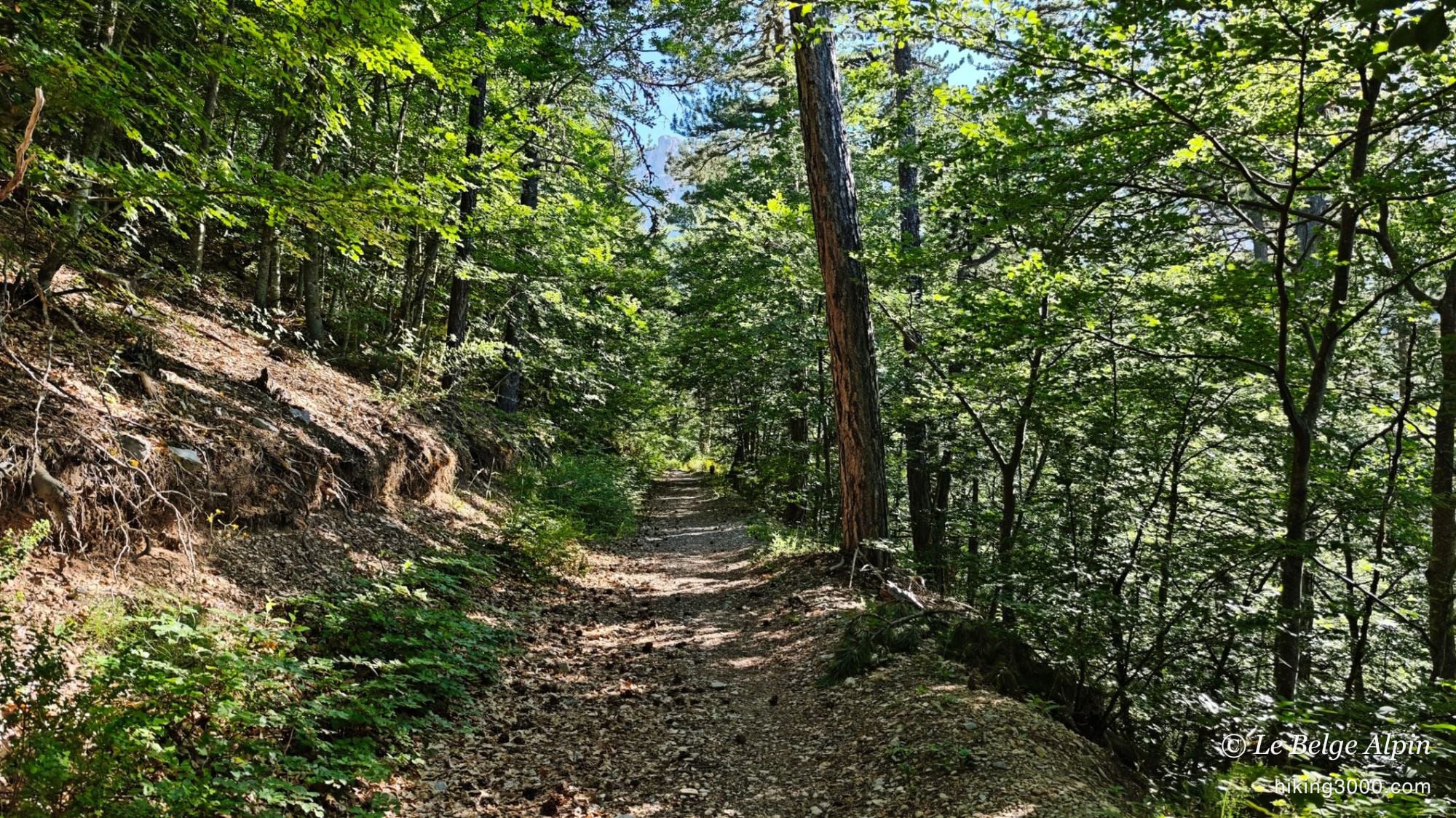
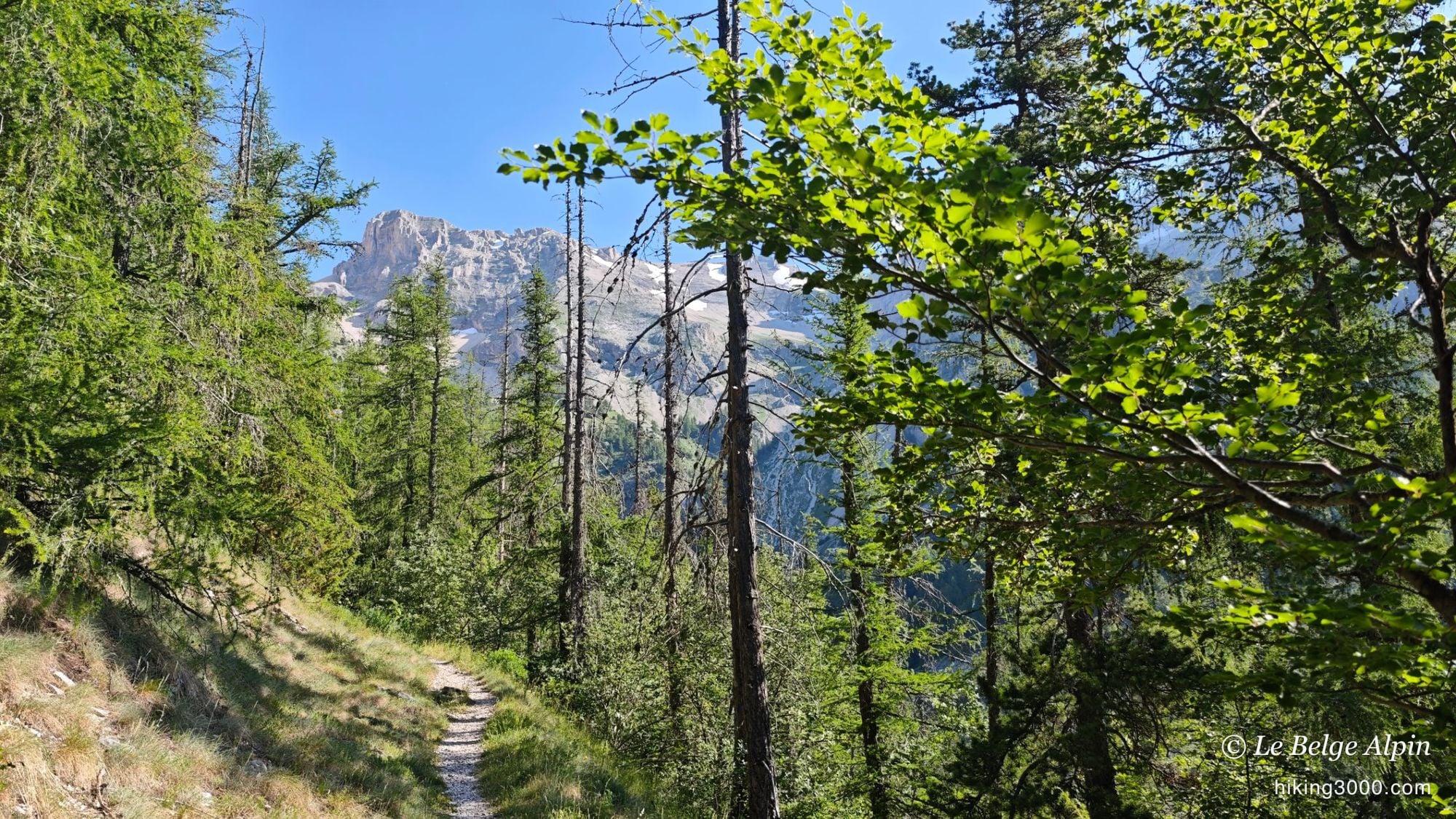
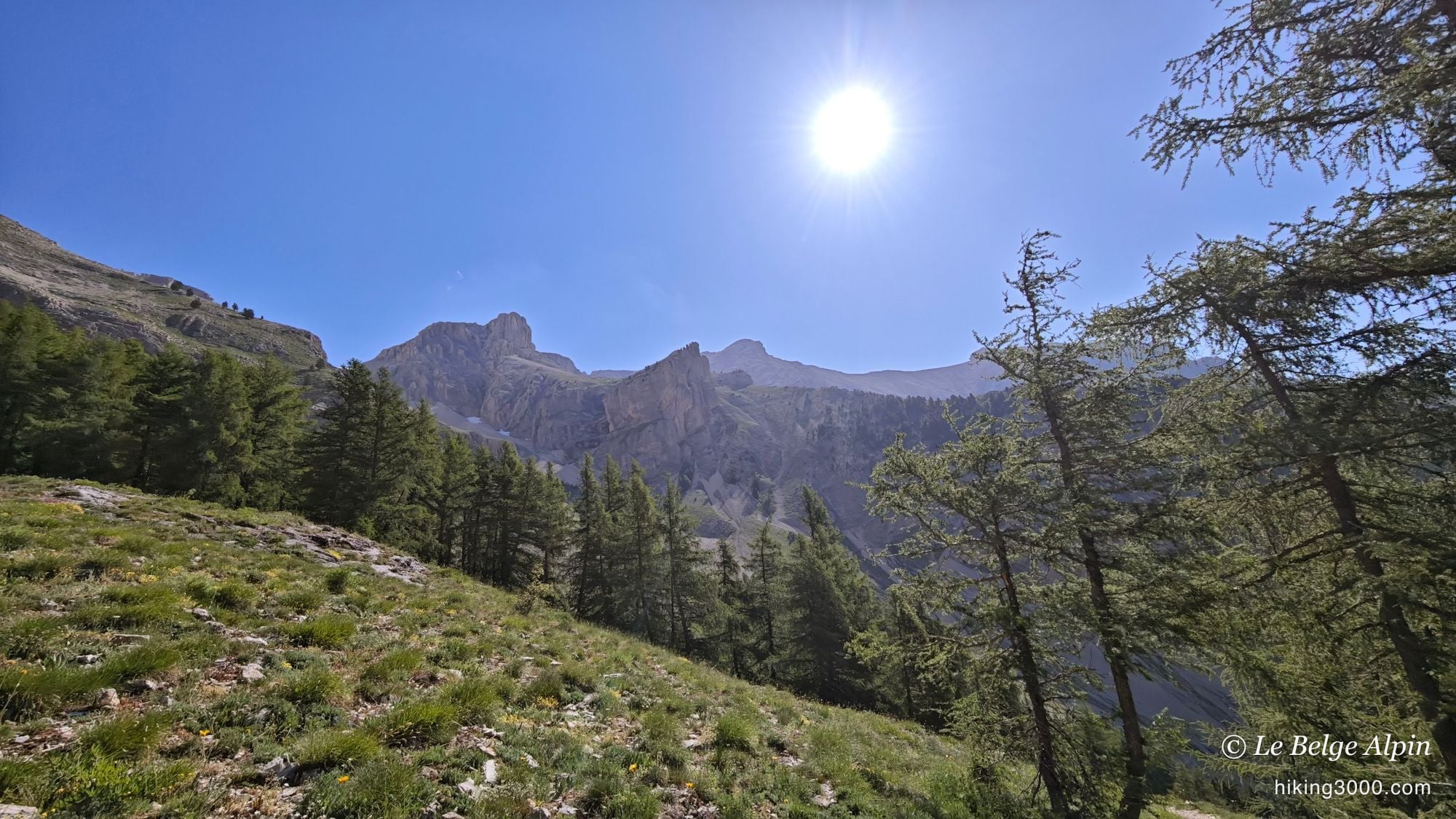
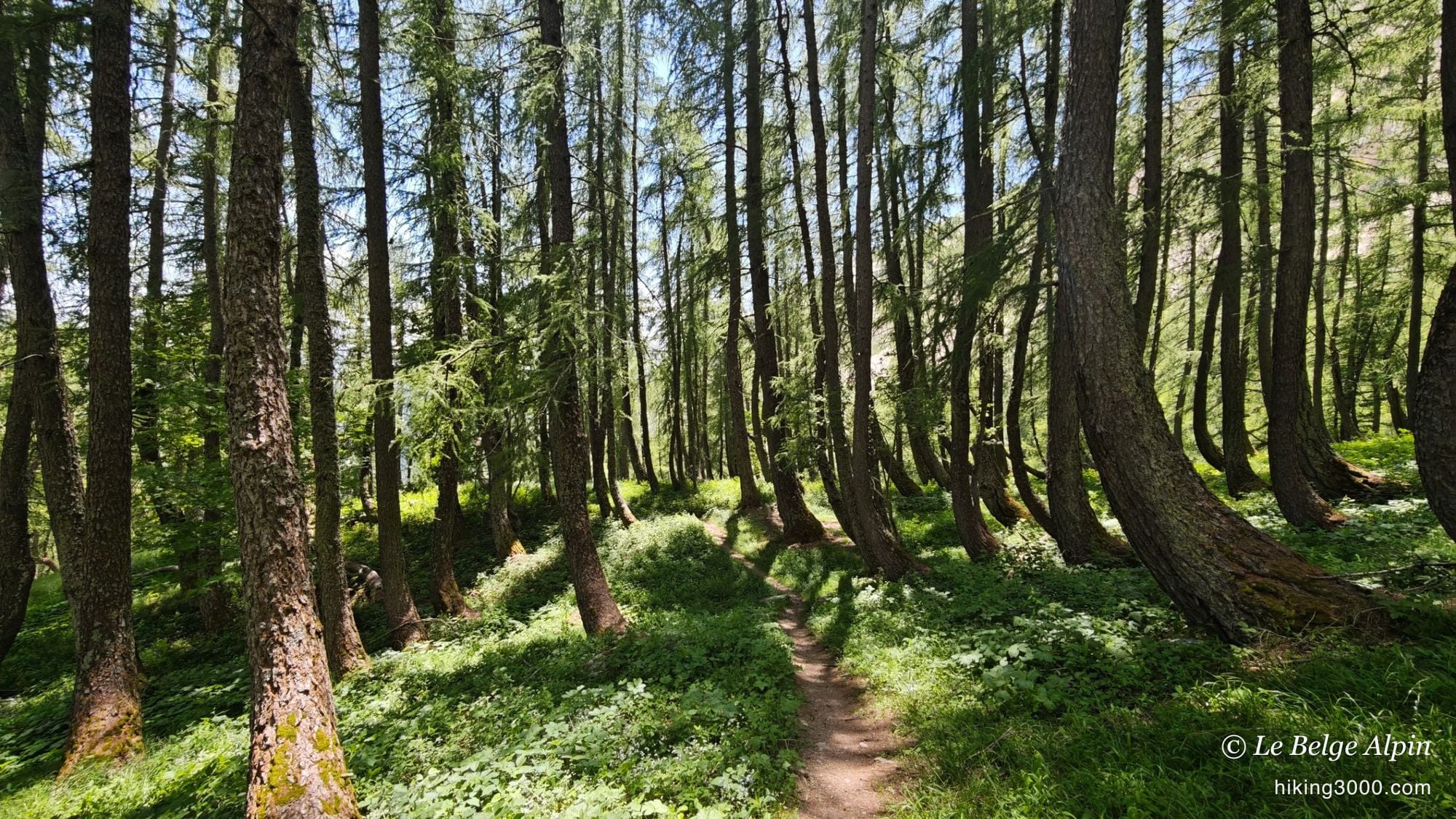
The start is from Montmaur, at the foot of the Combe d’Aurouze. You soon enter a fine larch forest, then the terrain steepens. And it was scorching hot: we were sweating buckets from the first slopes, the kind of day where water runs out too fast.
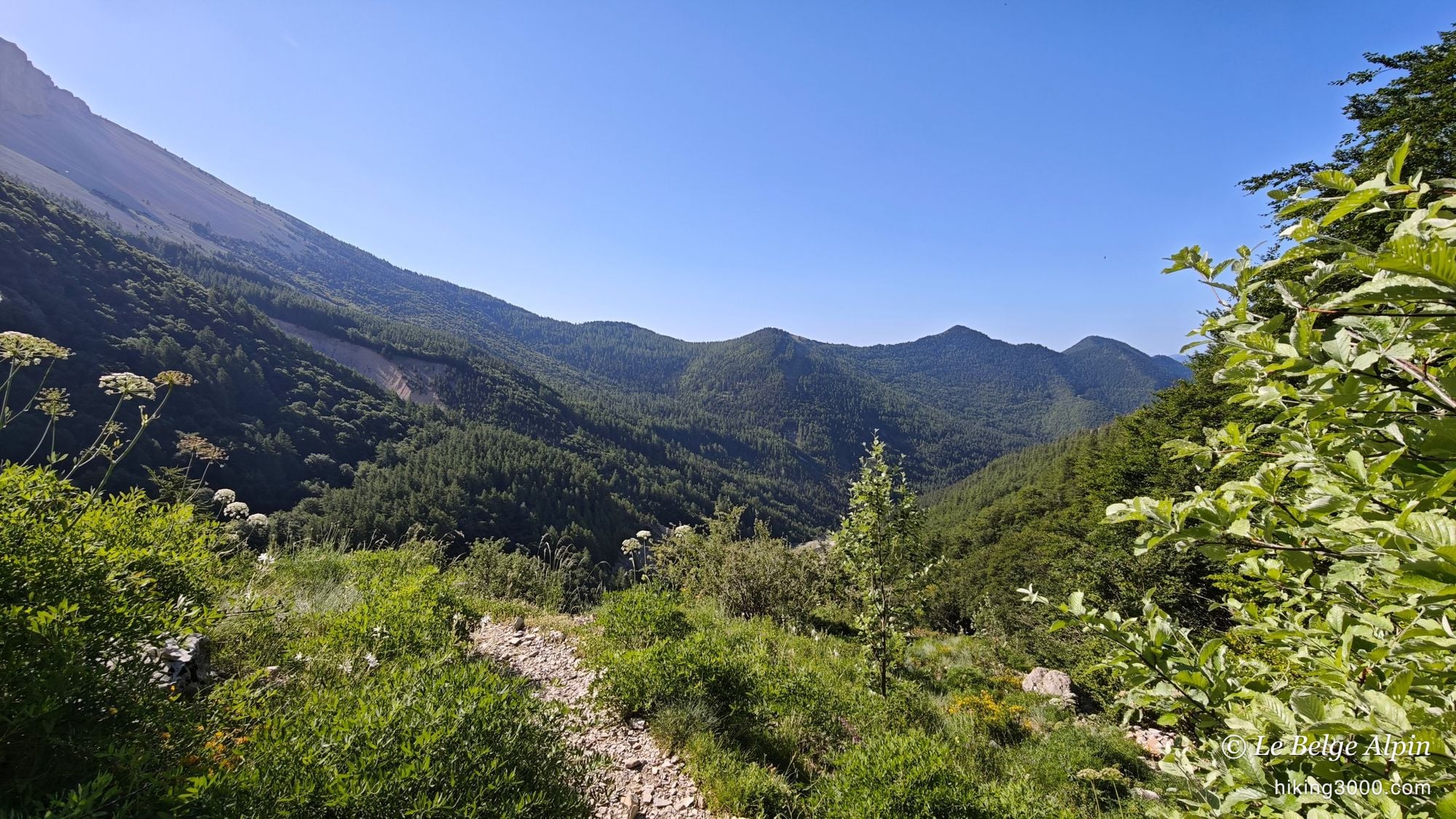
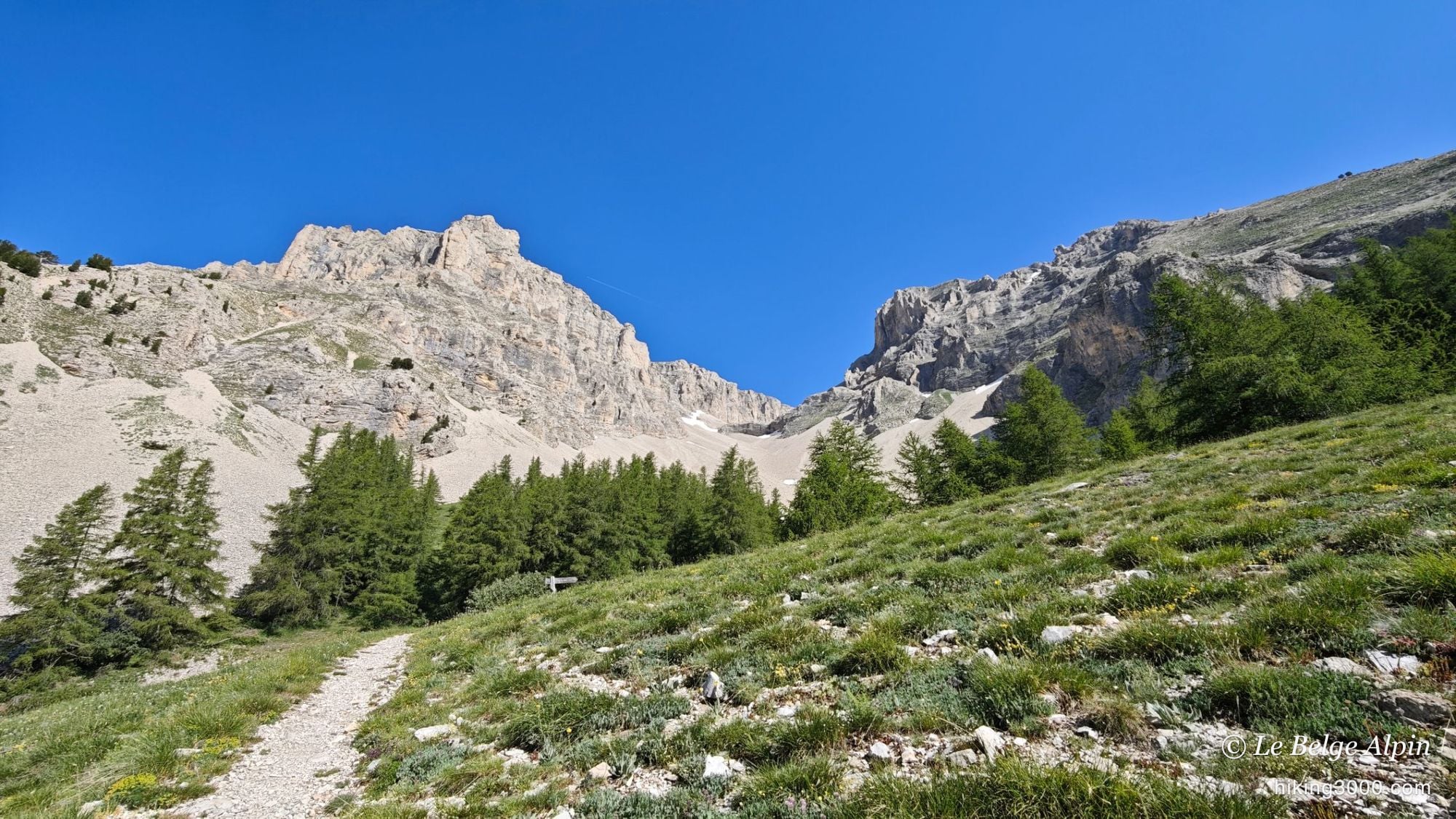
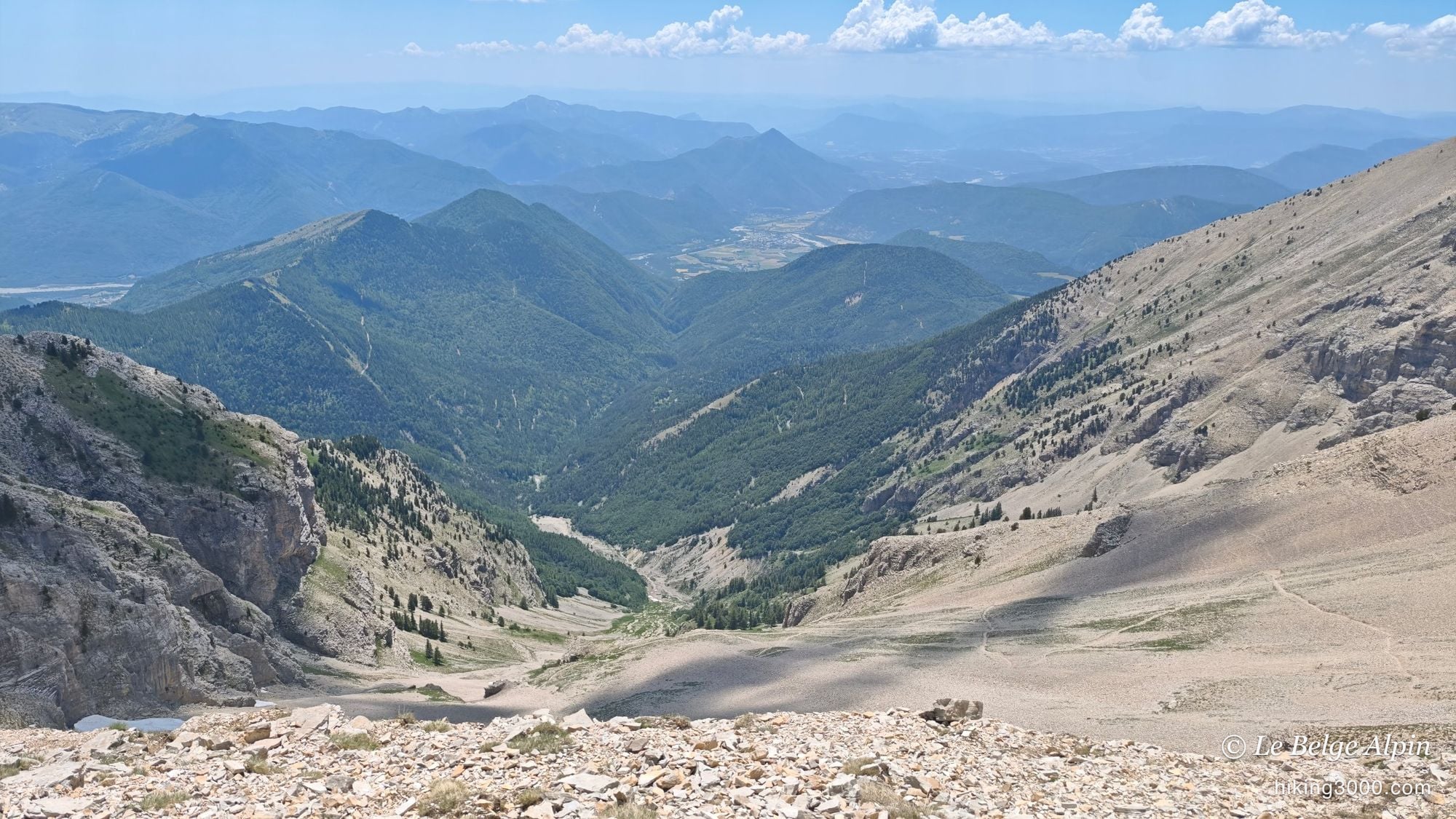
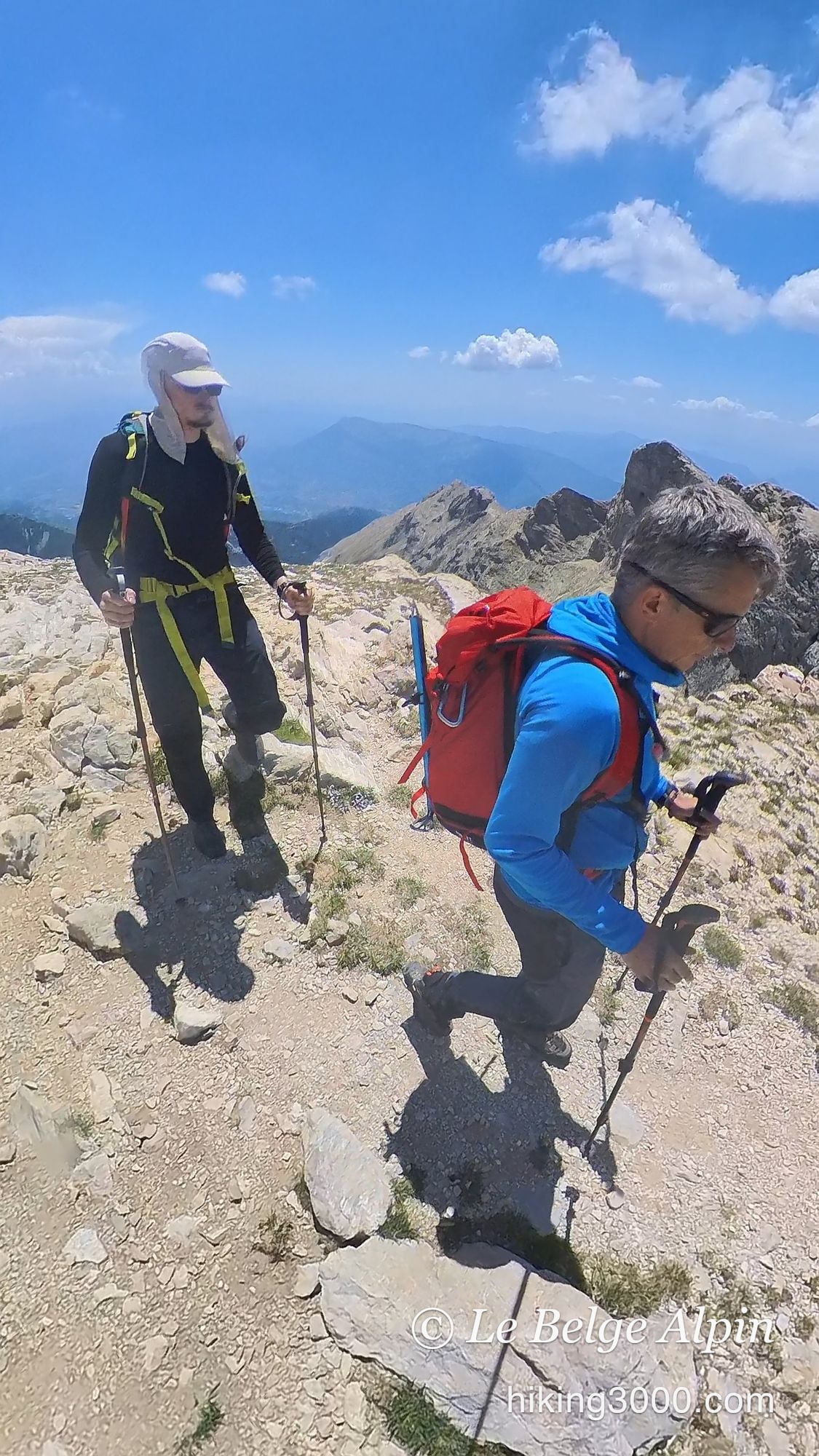
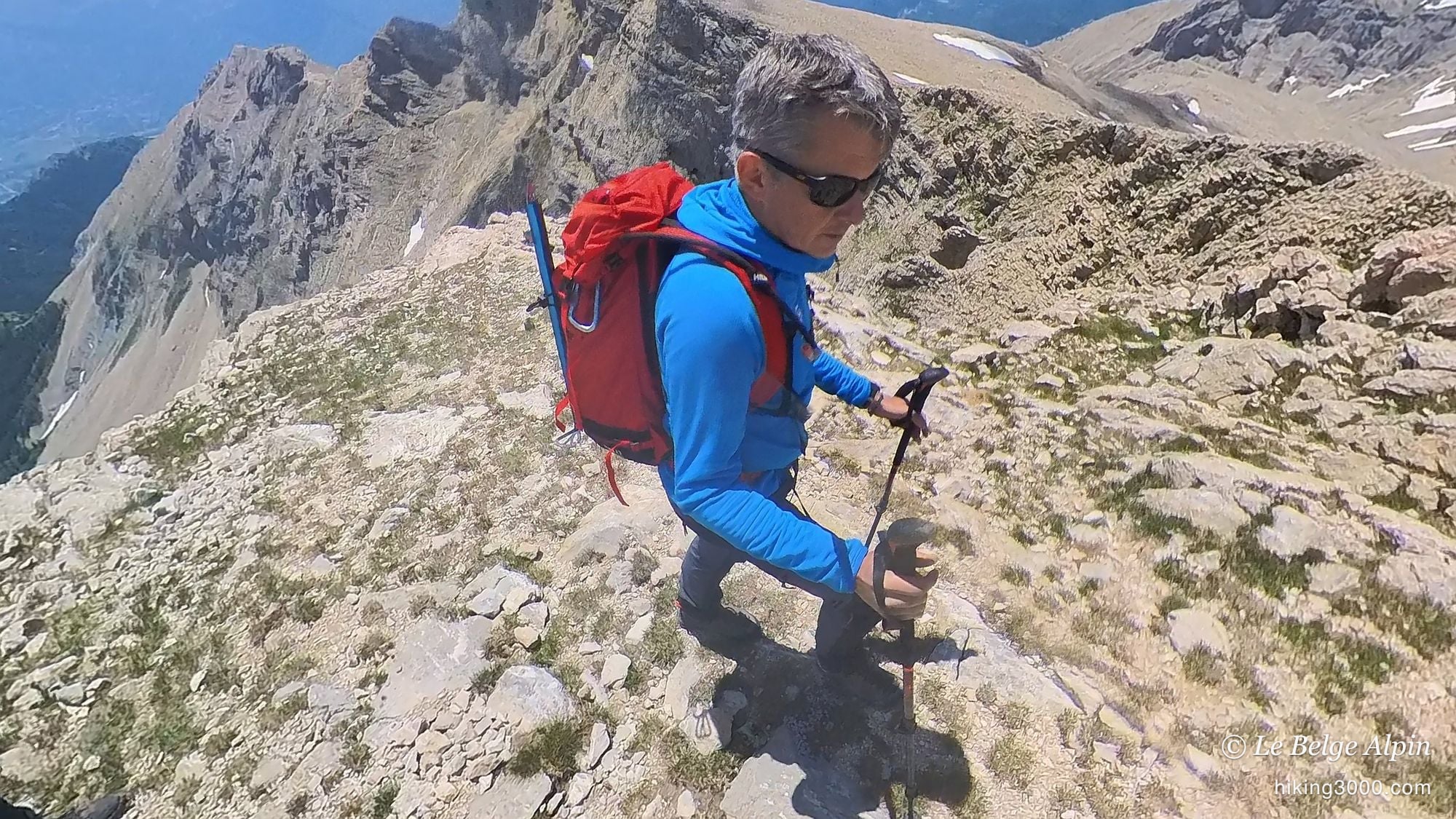
The scenery, though, is worth it. This south flank is mineral and austere, with steep combes ringed by limestone bars. And the great luxury: there is no one. On the whole route we barely met a soul.
1400 metres in one go, and the snow
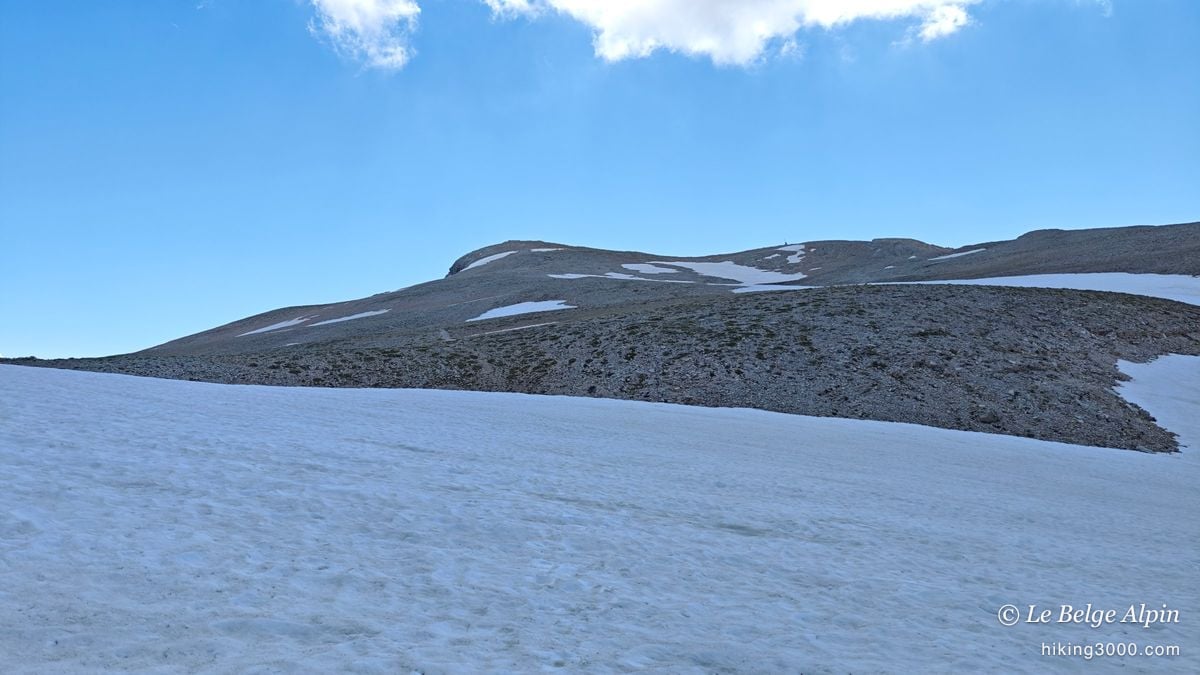
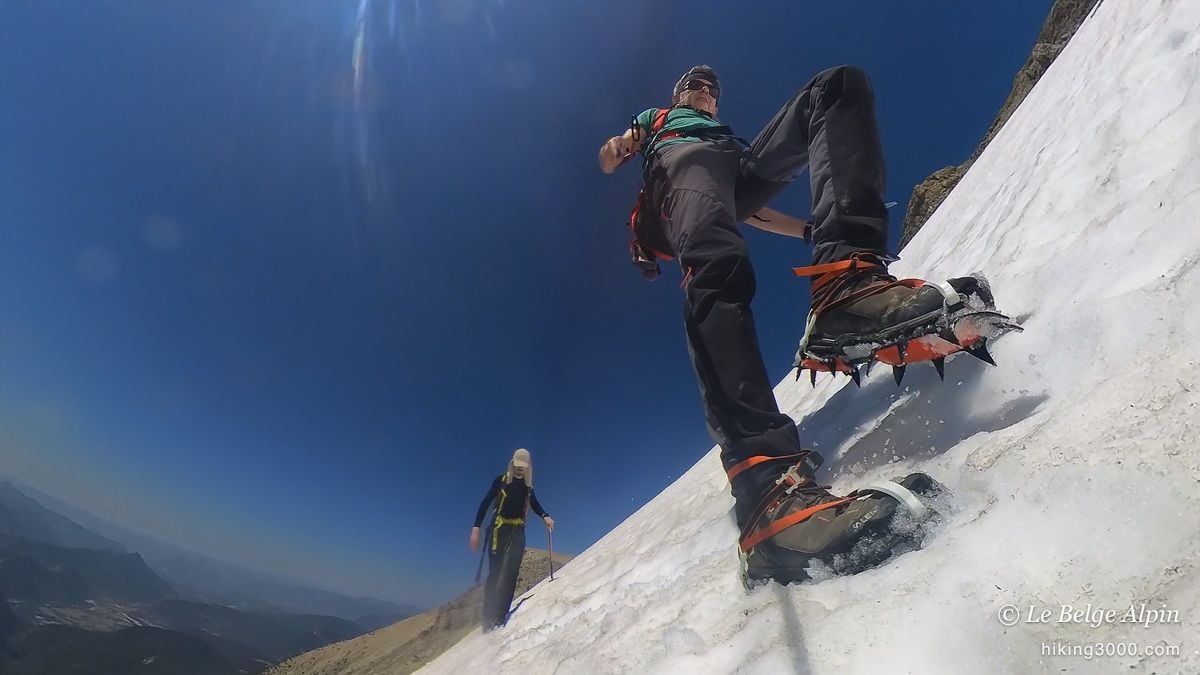
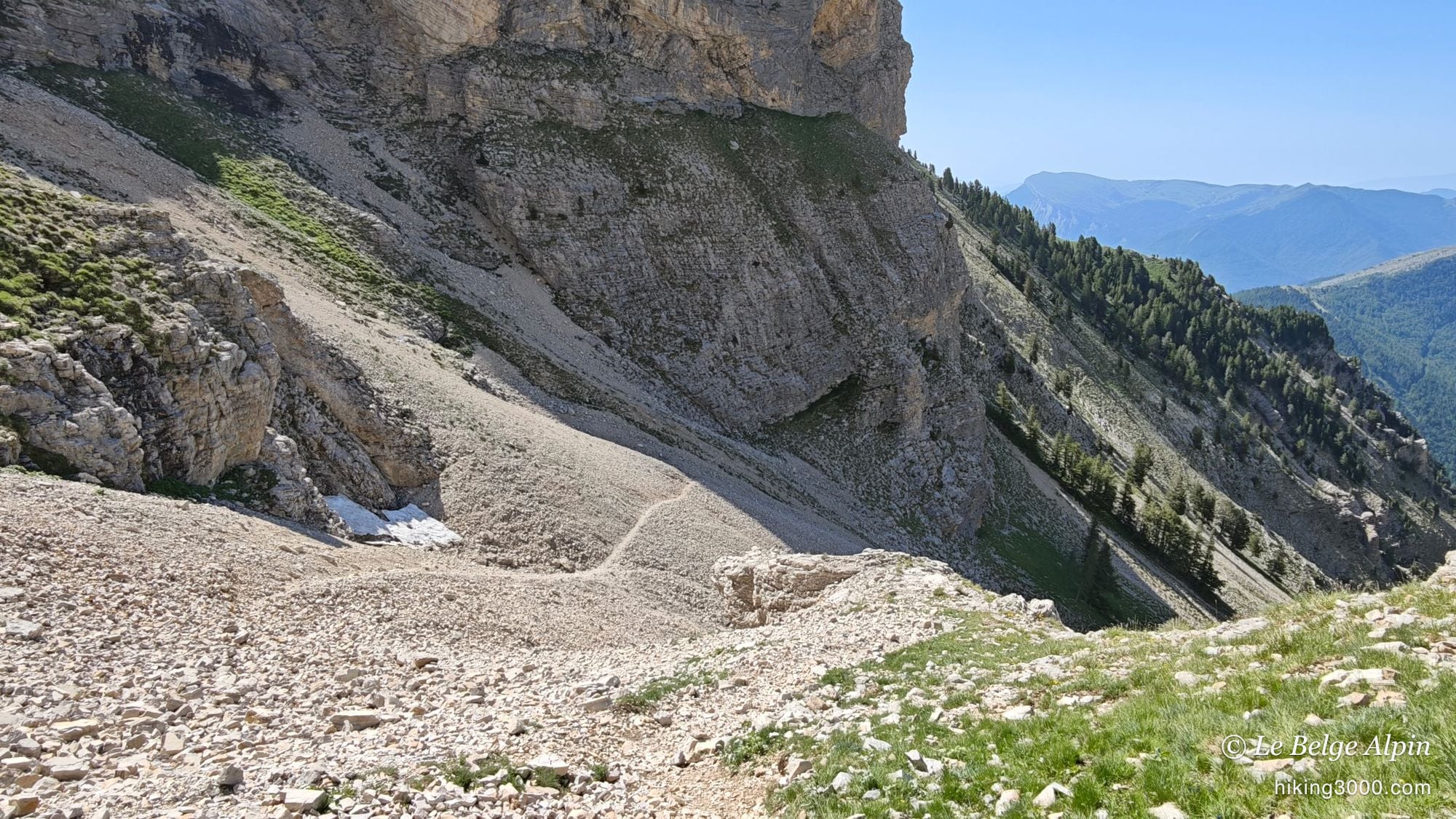
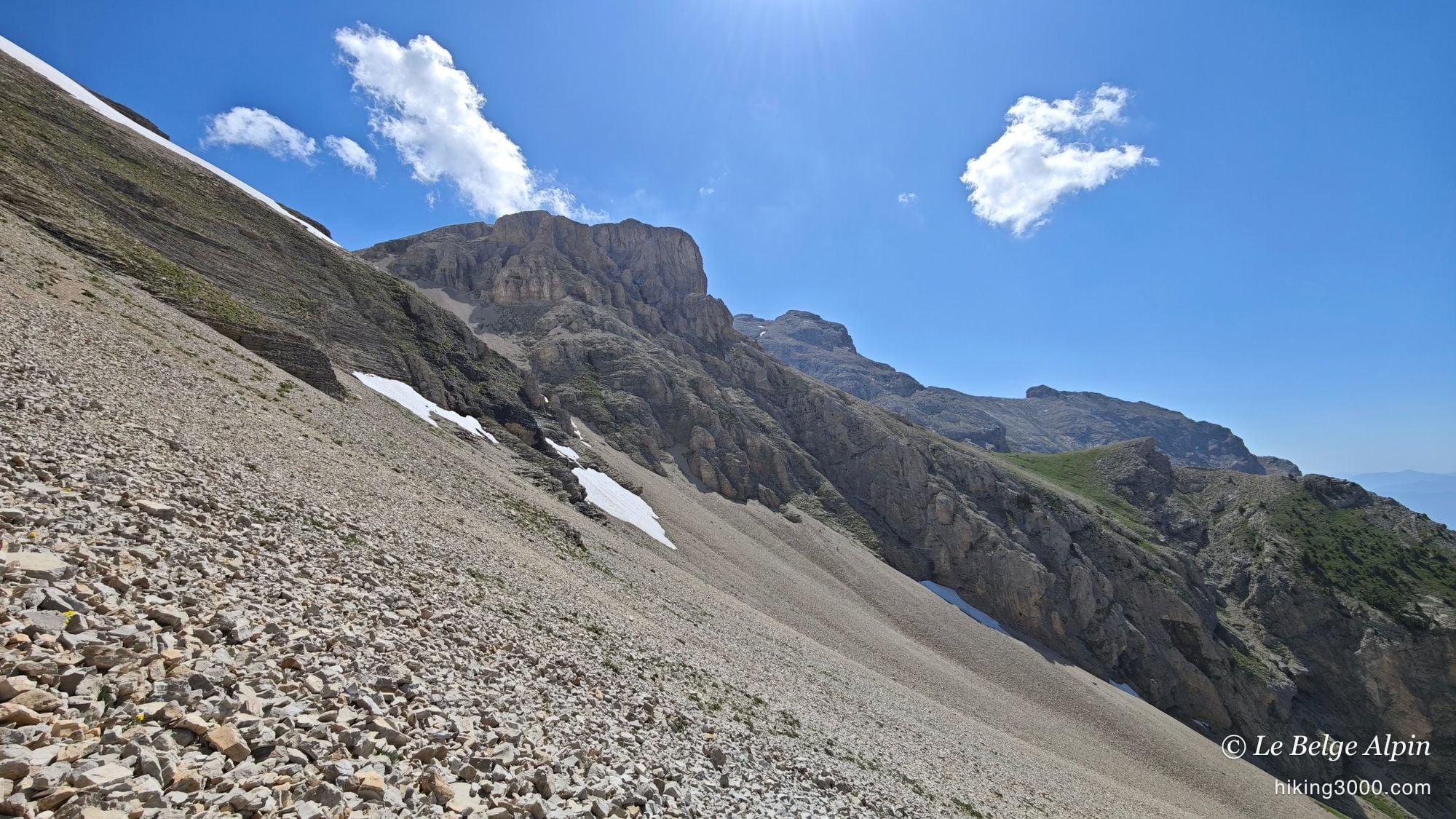
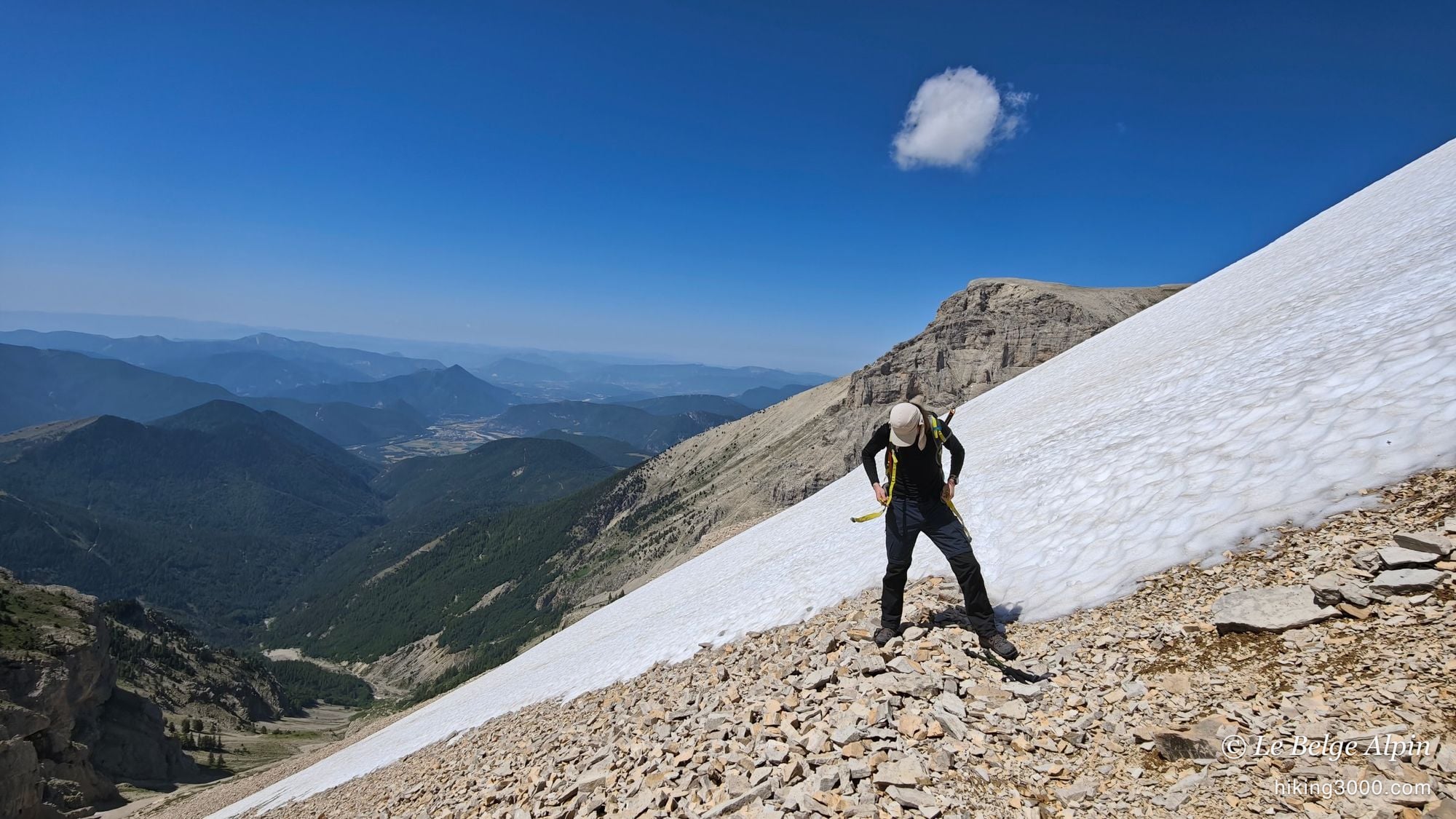
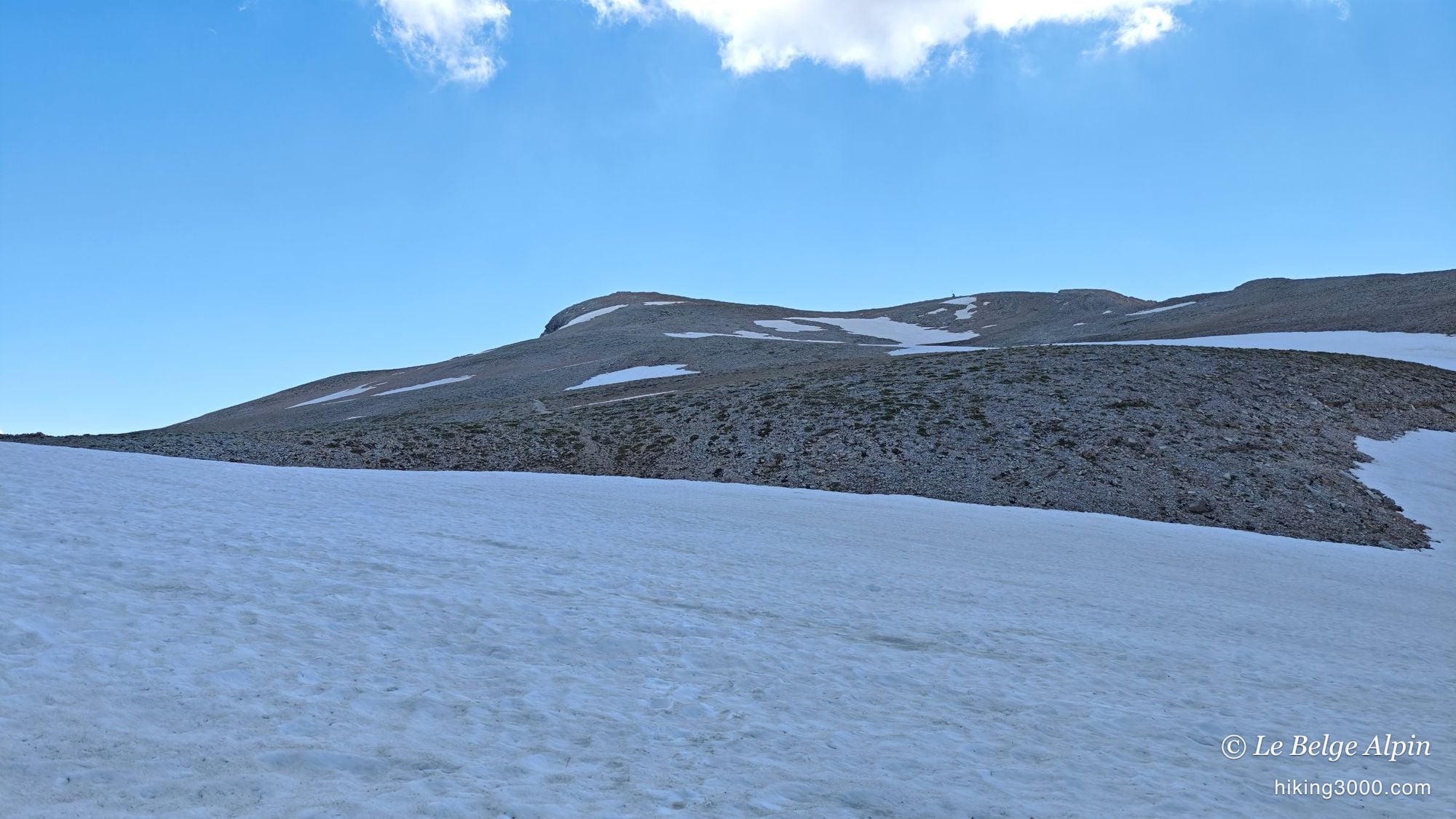
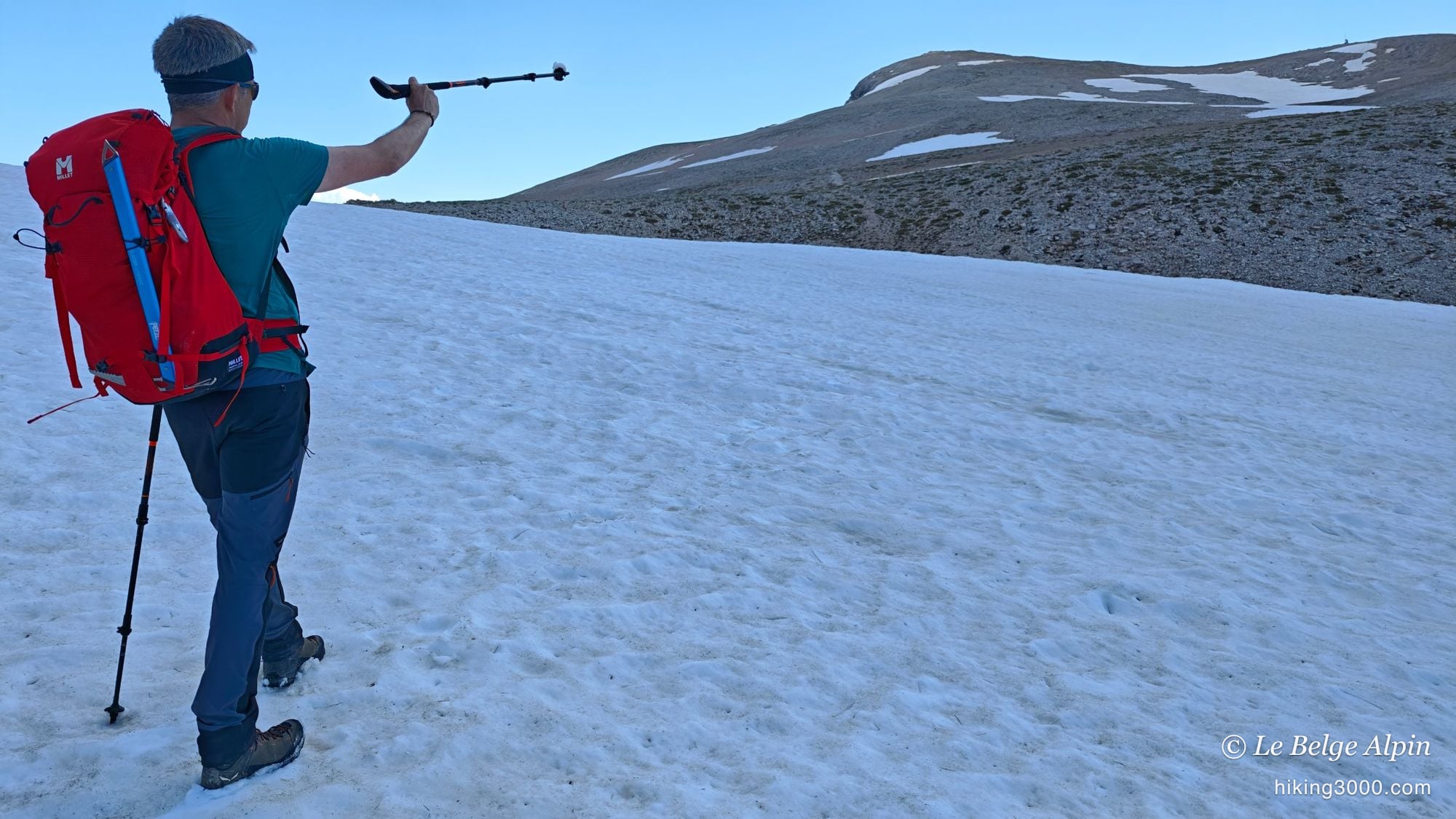
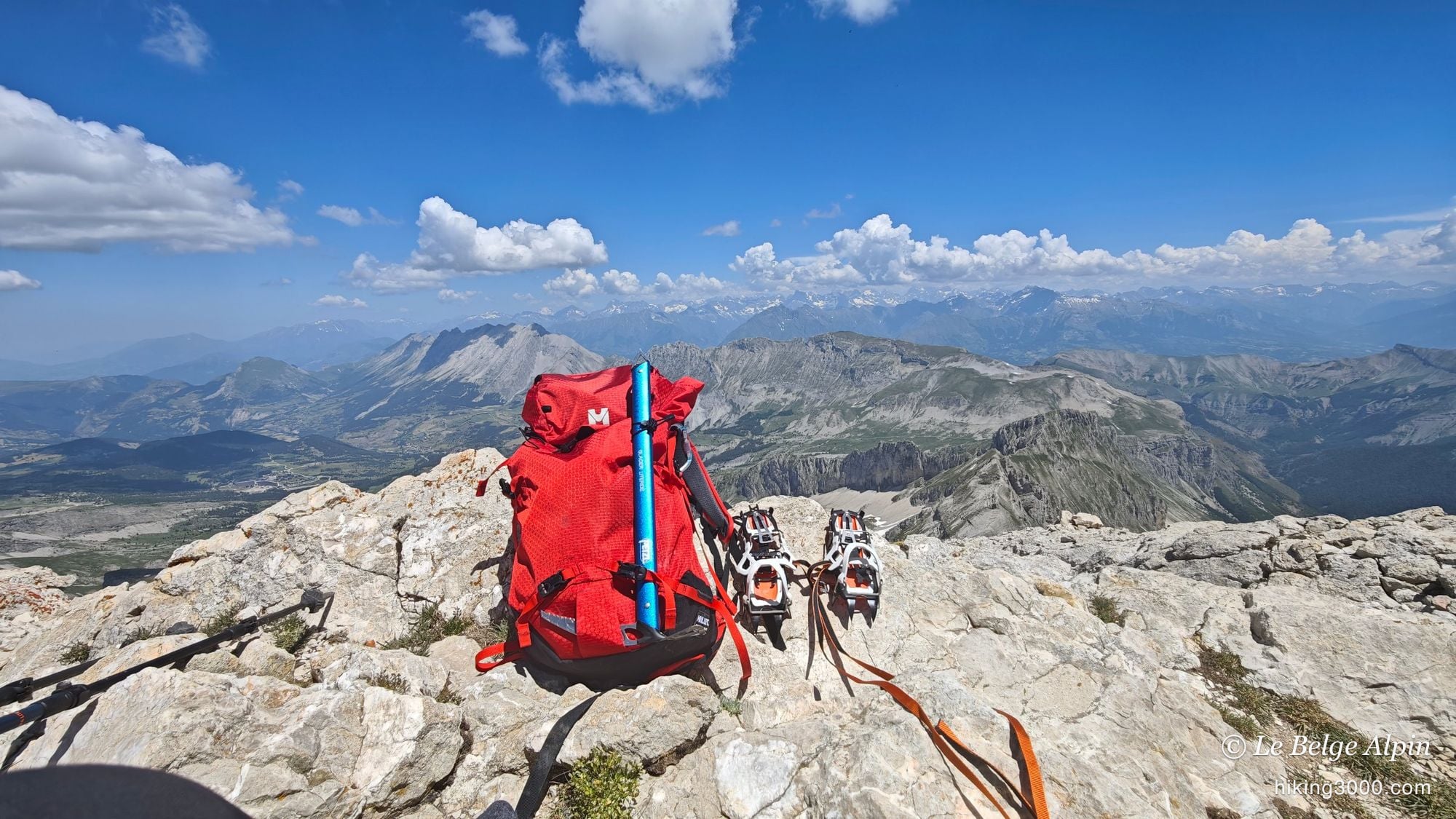
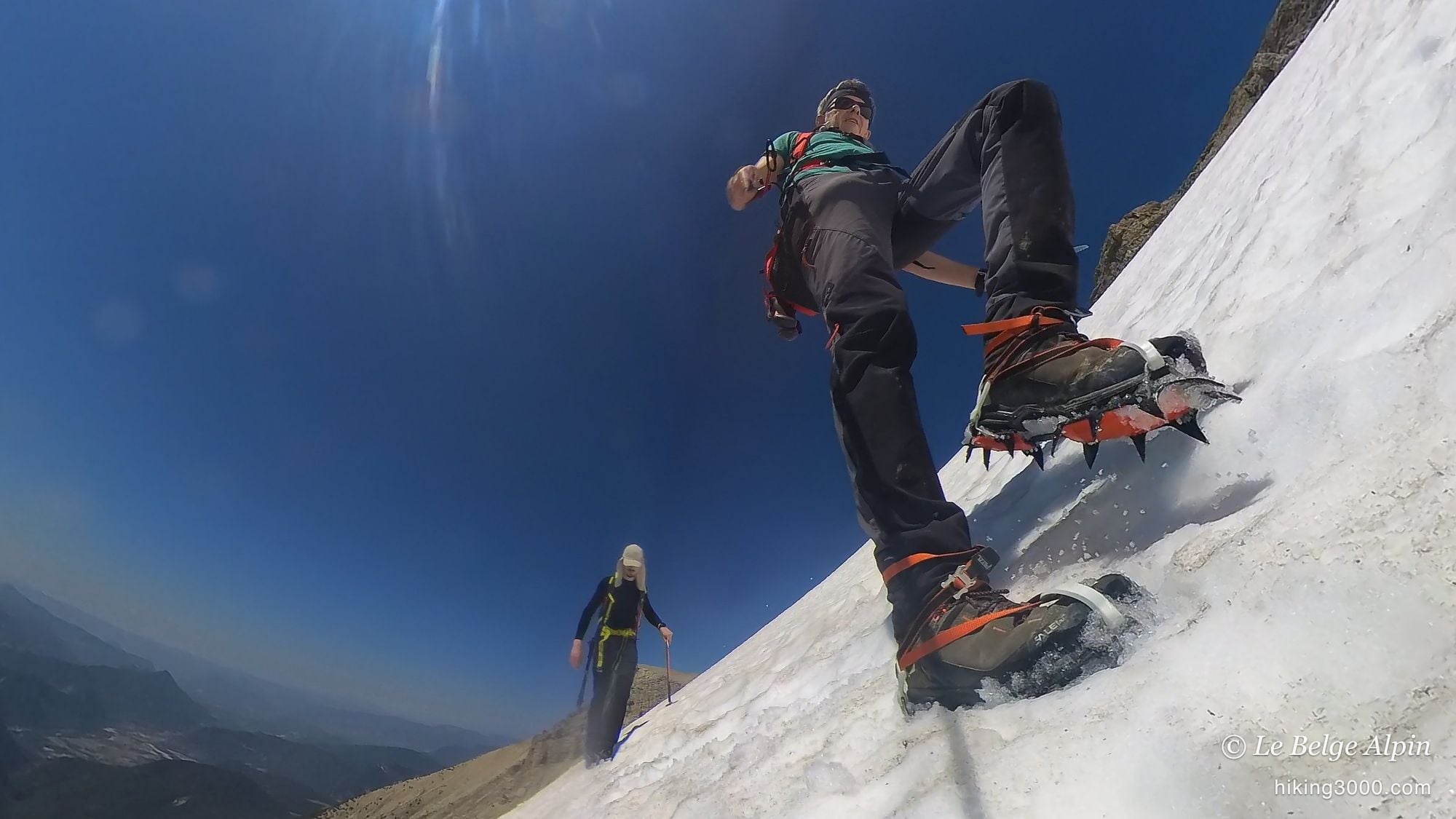
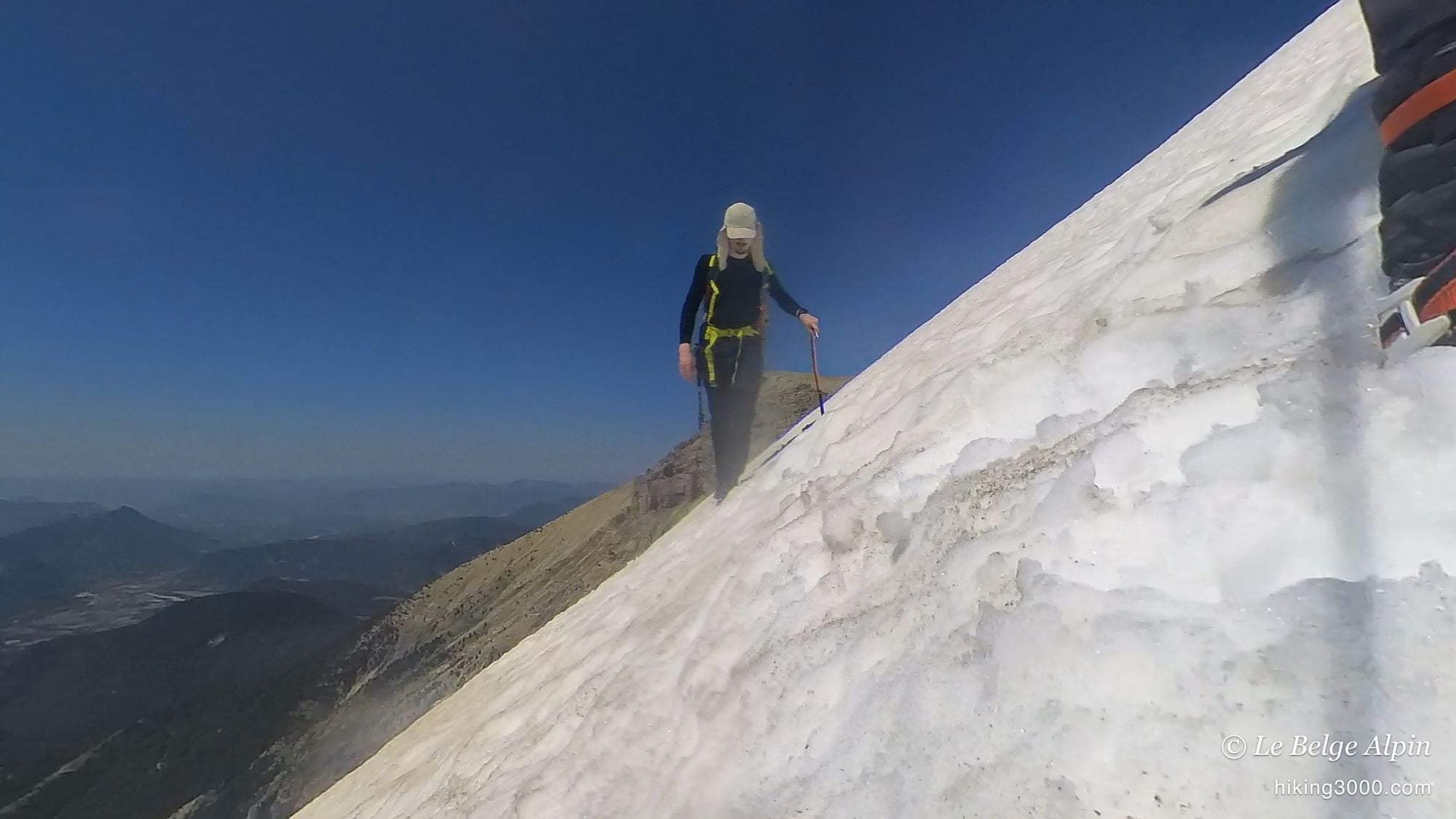
The higher you go, the tougher it gets. The ground is unstable in places, and above all, up high, we hit a large, steep snowfield. Not the kind you cross with your hands in your pockets: we put on crampons and pulled out the ice axe. In mid-June, at this altitude, the mountain was barely out of winter.
Seriously: without crampons and an ice axe, this passage is off-limits early in the season. We watched hikers commit without gear, hesitate, and turn back. A slip on a hard snow slope does not forgive. Check the snow conditions before you go.
That is what made the day as beautiful as it was demanding: a real taste of a mountain route, with the satisfaction that comes when the summit dome finally lets itself be reached.
At the summit, the roof of the Dévoluy
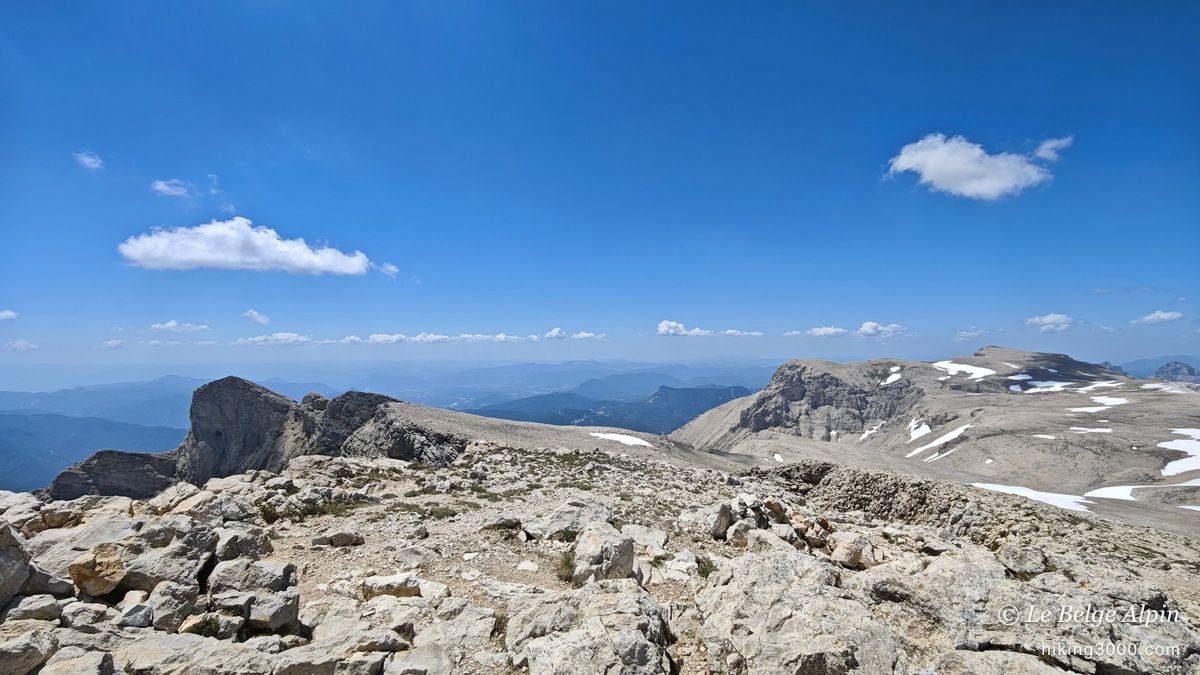
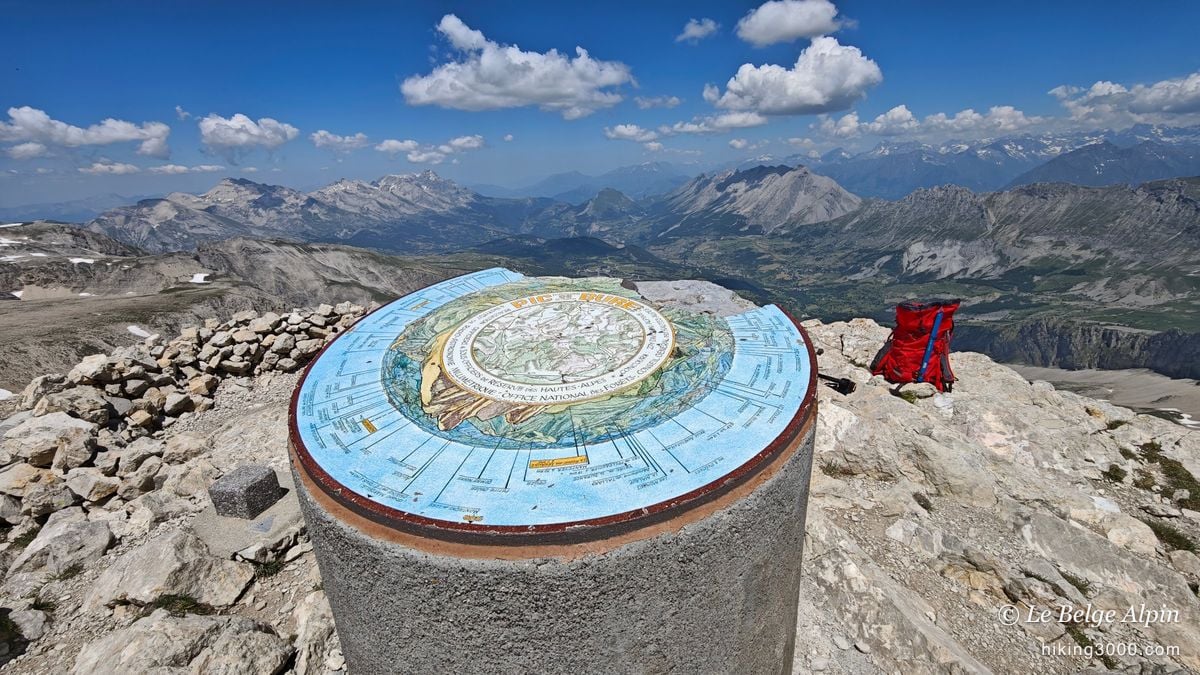
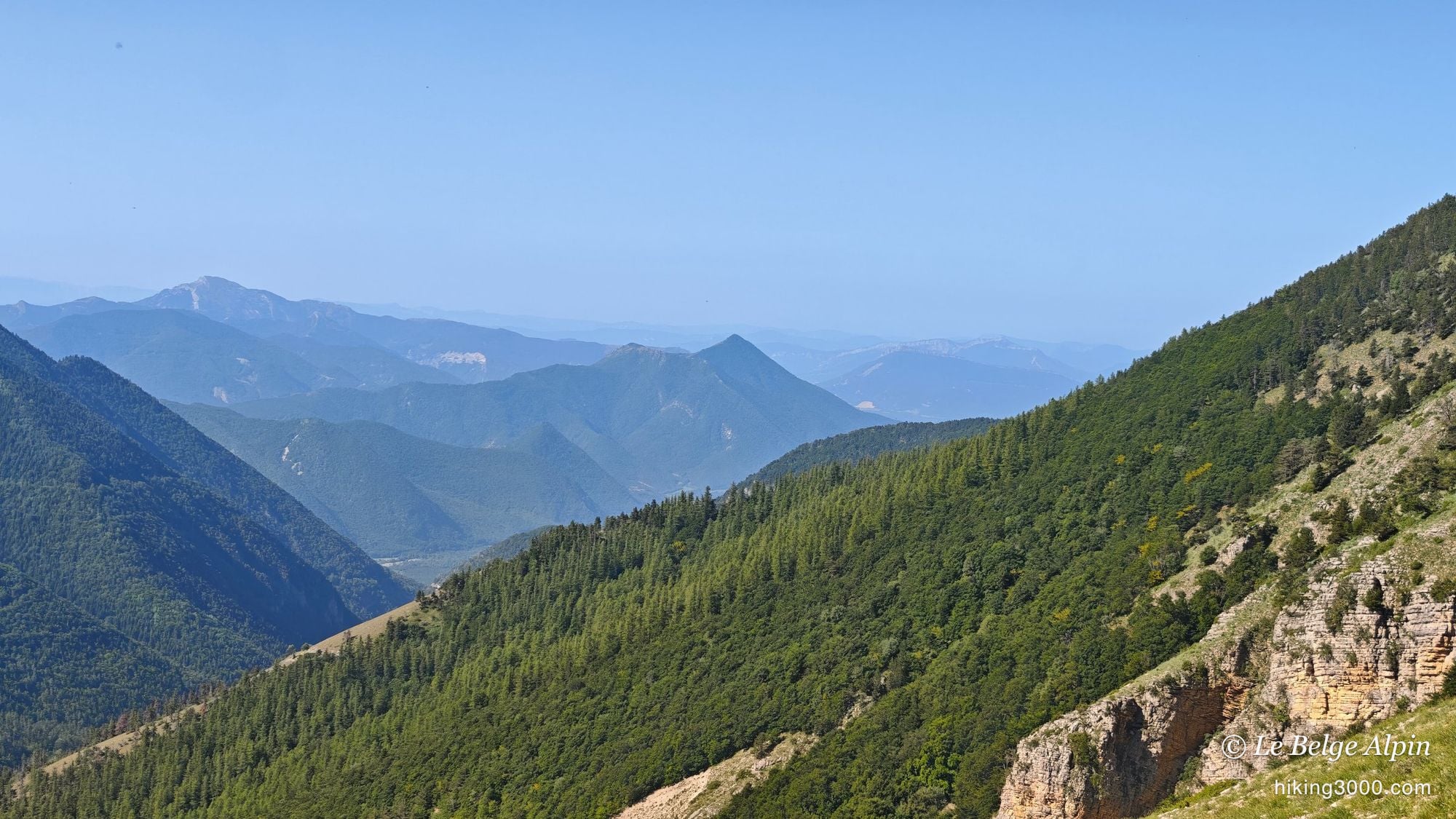
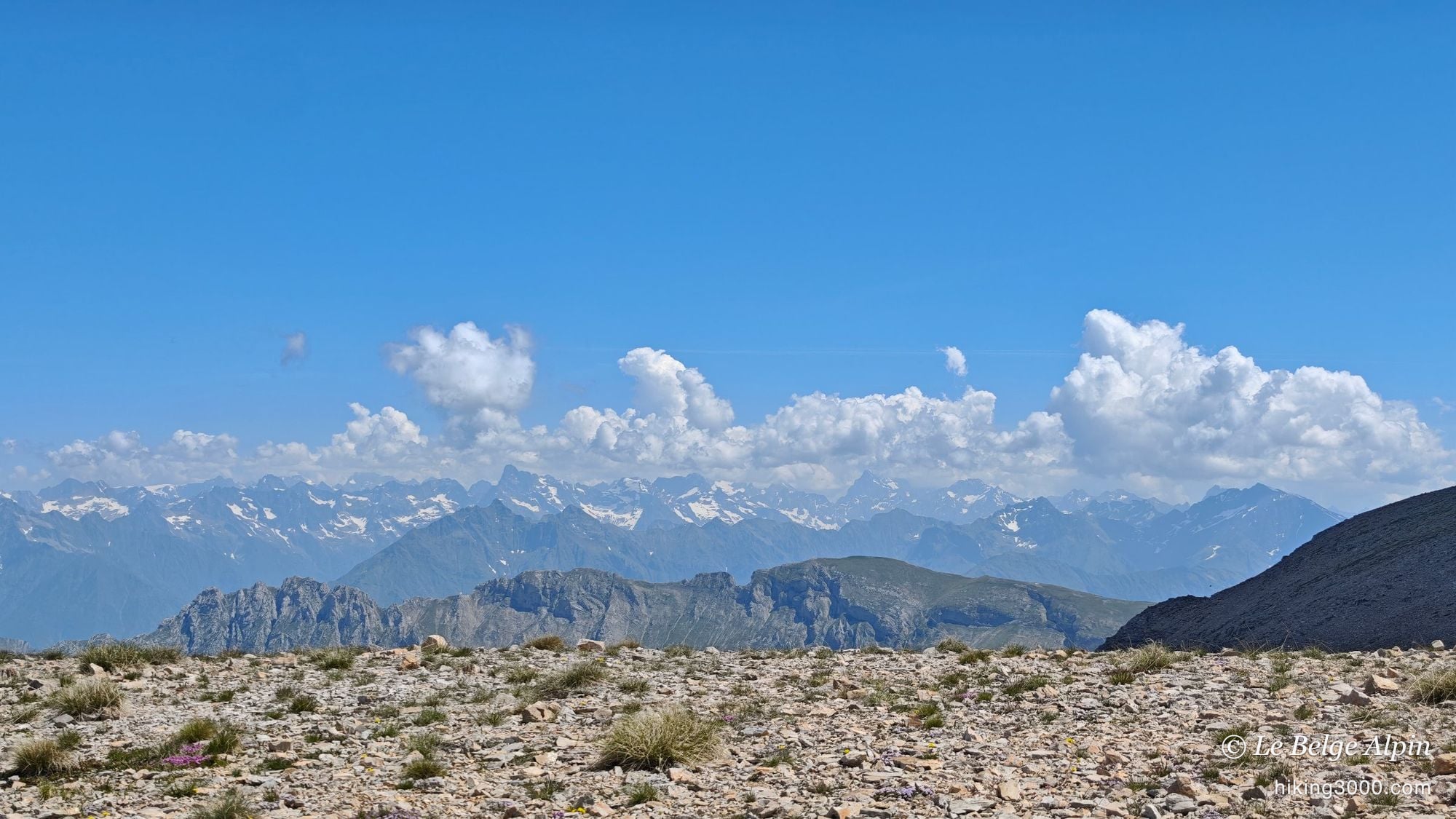
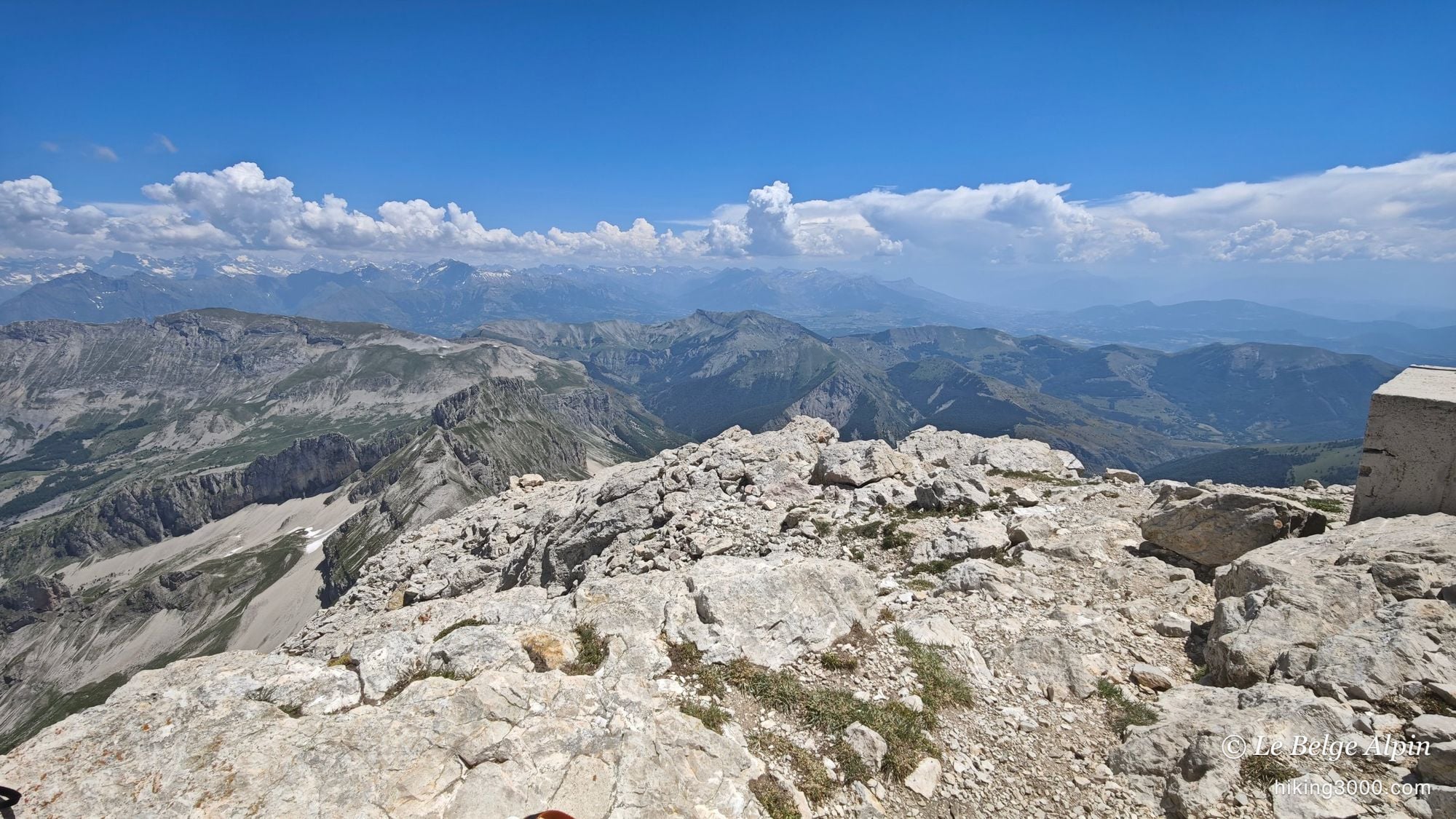
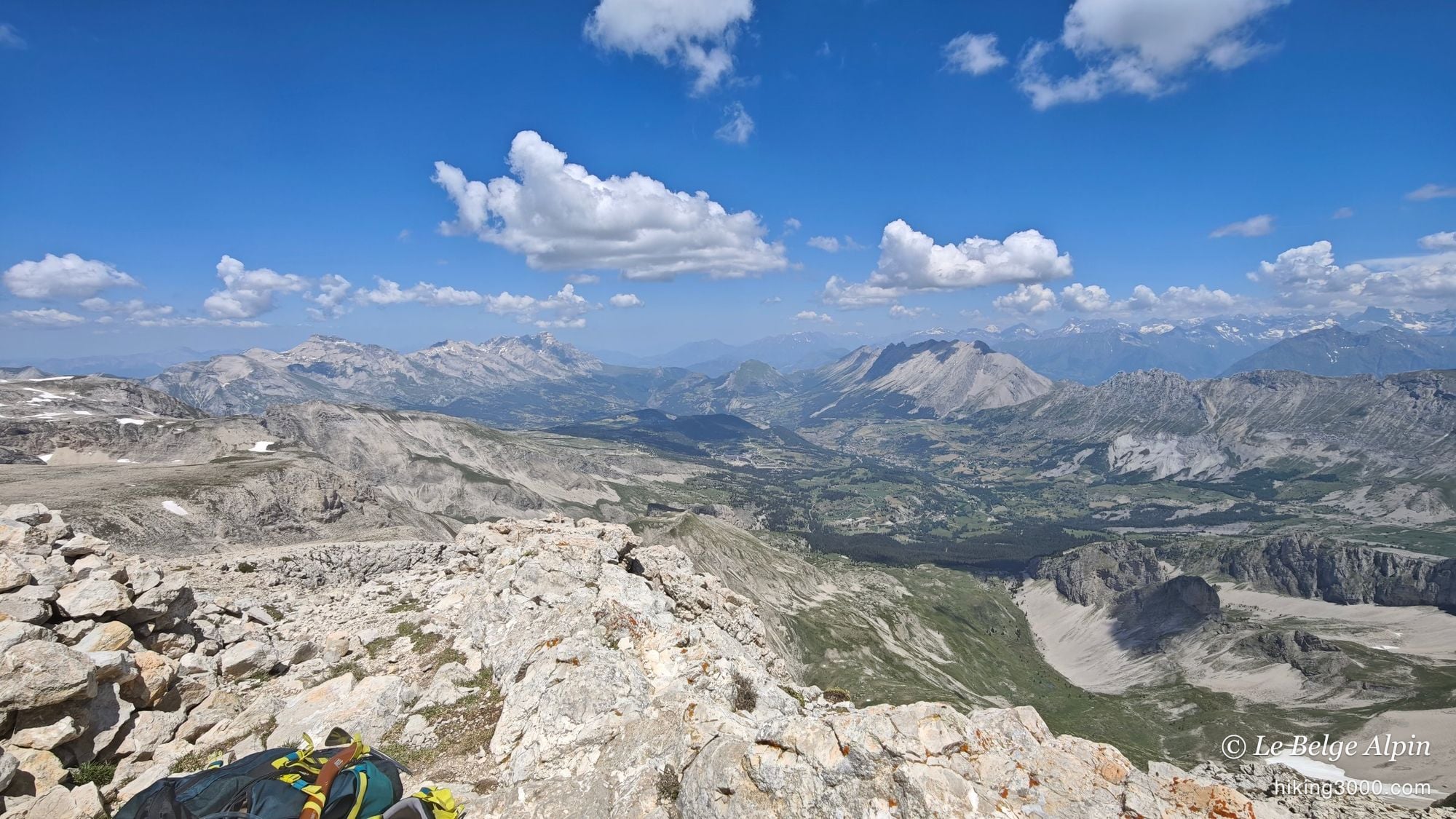
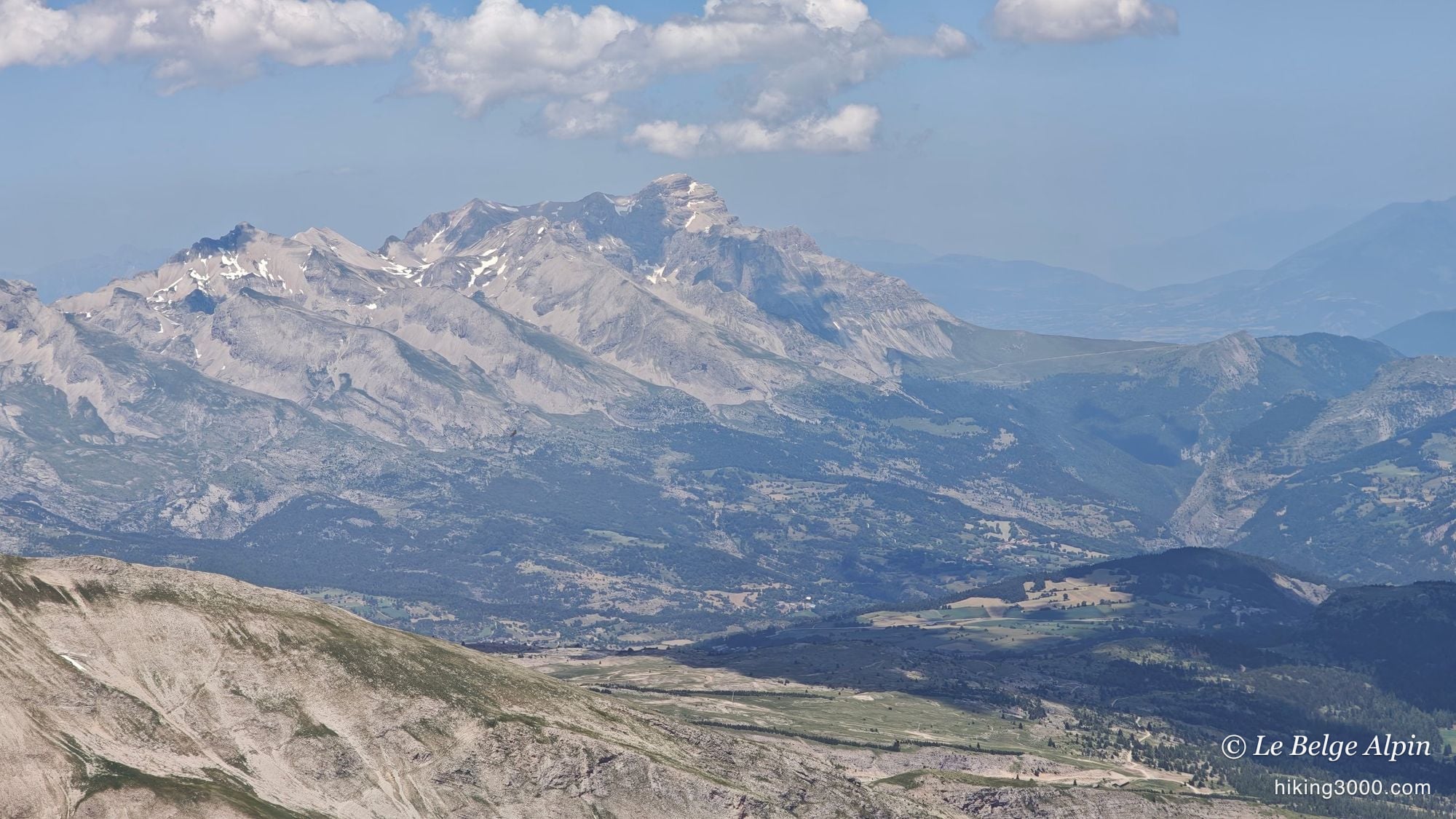
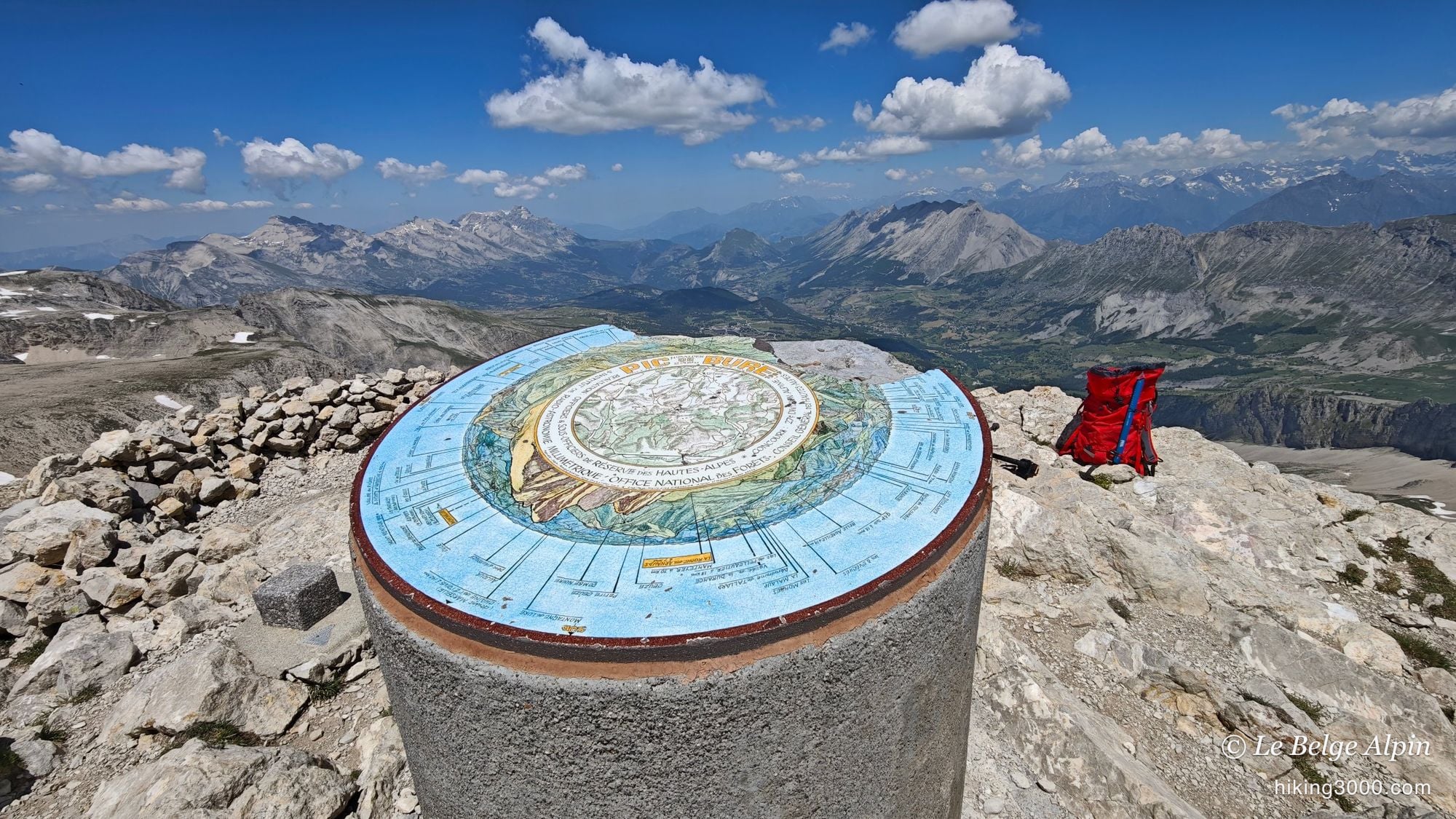
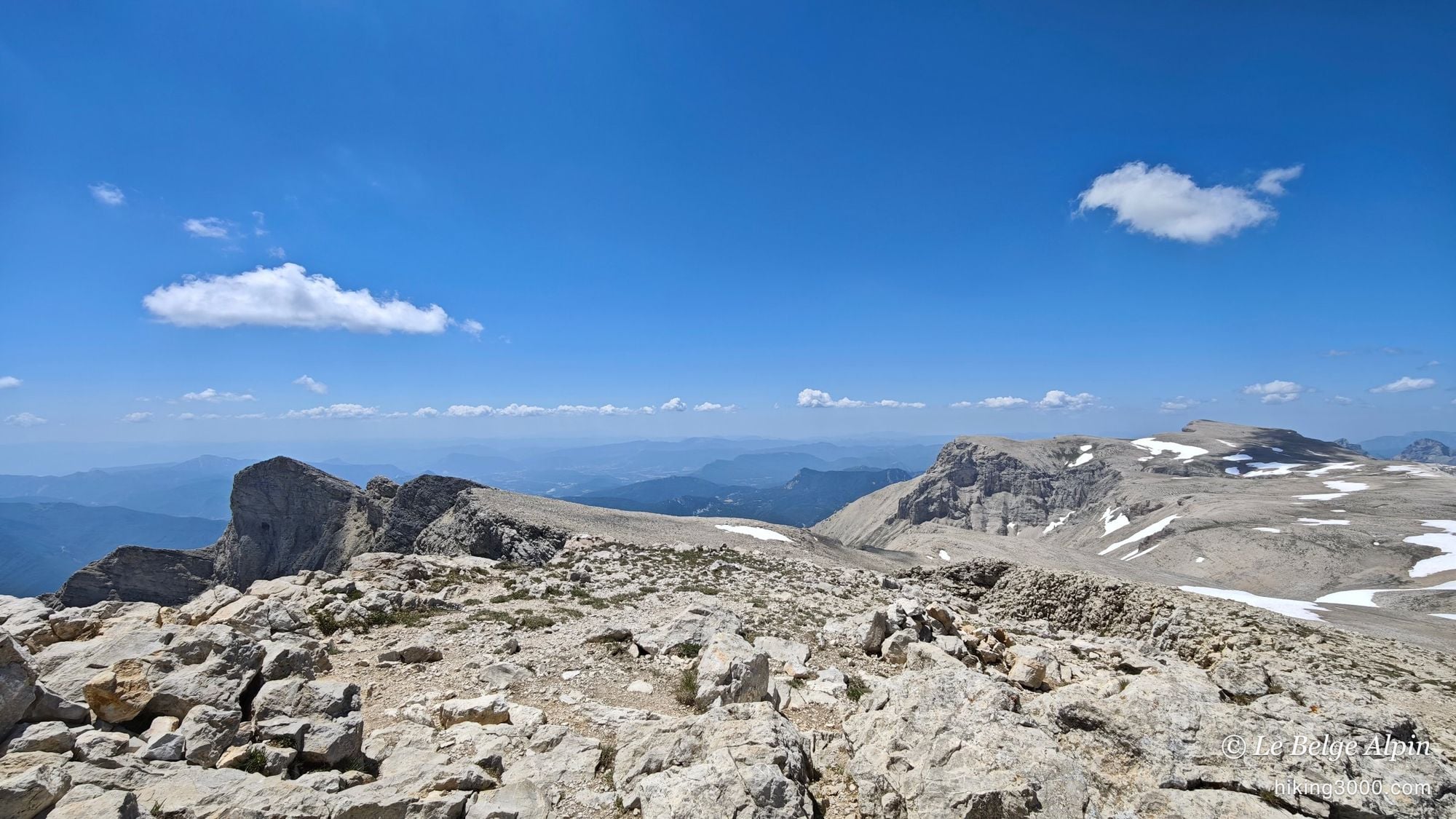
The summit of Pic de Bure is not a peak but a vast karst plateau, lunar, dotted with snow patches. You walk across this mineral desert to the orientation table, and there the panorama explodes: the whole Dévoluy below, and far off the long line of the Southern Alps, all the way to the Écrins. For 2709 m, it feels much higher.
The Plateau de Bure observatory
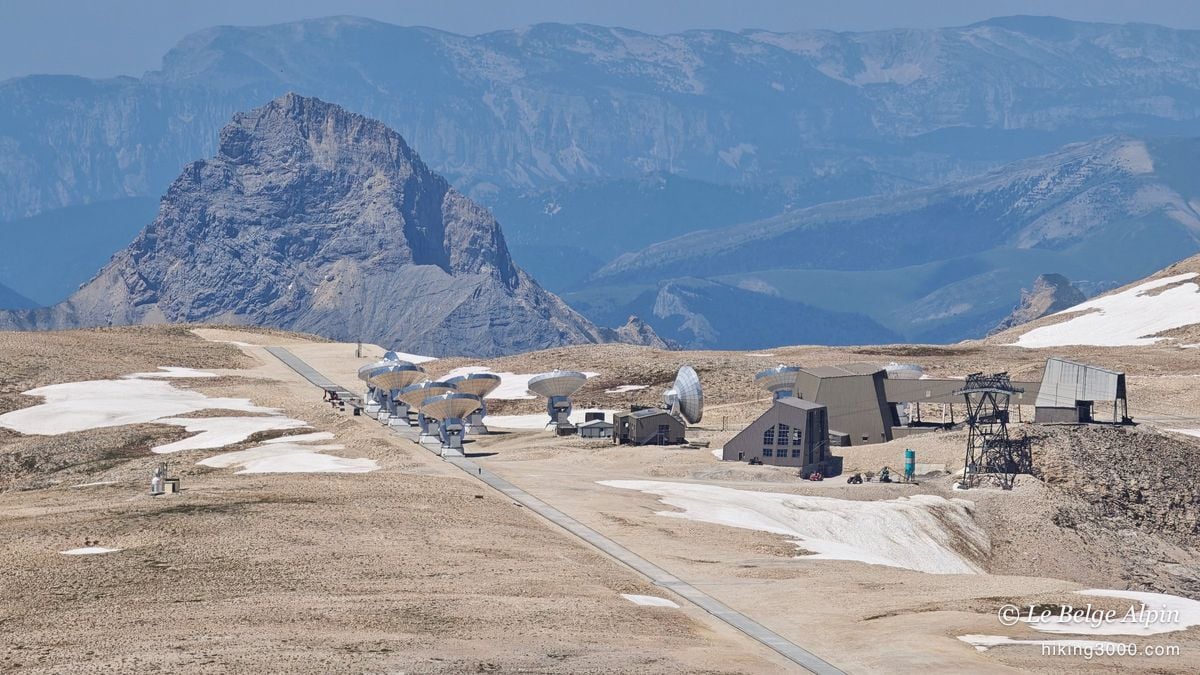
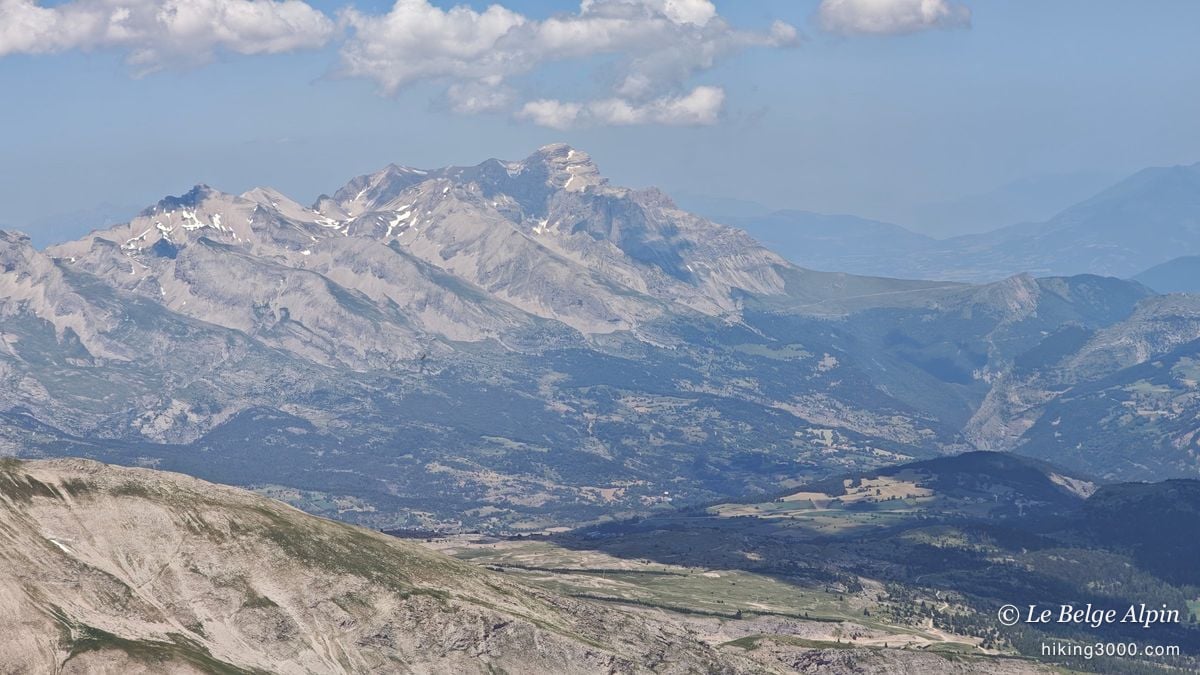
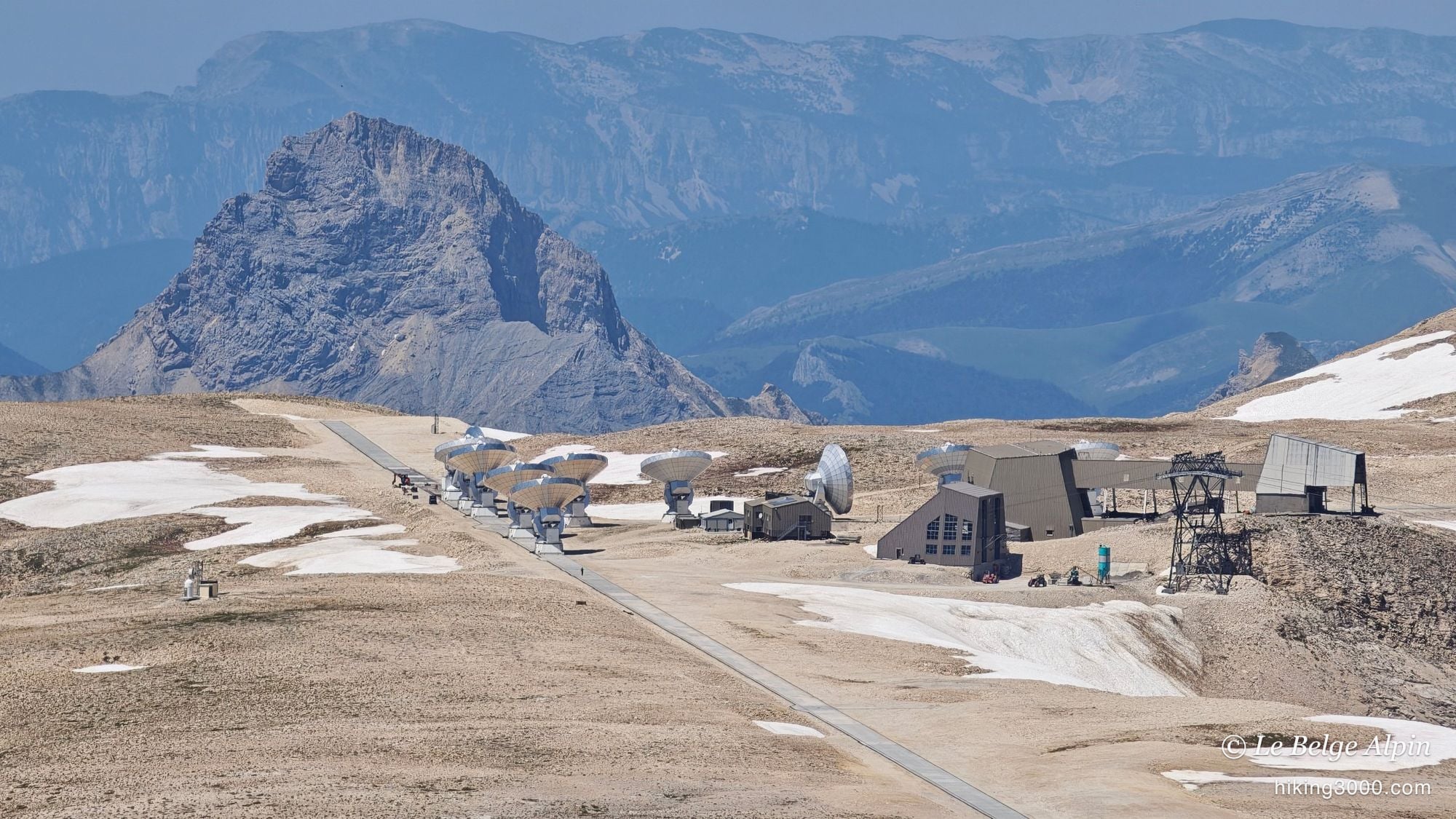
A curiosity that stands out in this wild setting: large white antennas rise on the plateau. This is the Plateau de Bure observatory, known as NOEMA, run by IRAM. A millimetre radio interferometer among the most powerful in Europe, whose dishes probe the cold, distant universe, the matter of gas clouds, the formation of stars and galaxies.
Perched above 2500 m to escape atmospheric interference, the site is not open to the public and is reached by a vertiginous cable car. Seeing this cutting-edge machinery set down among rock and snow has something unreal about it.
Descent, and well done Thibault
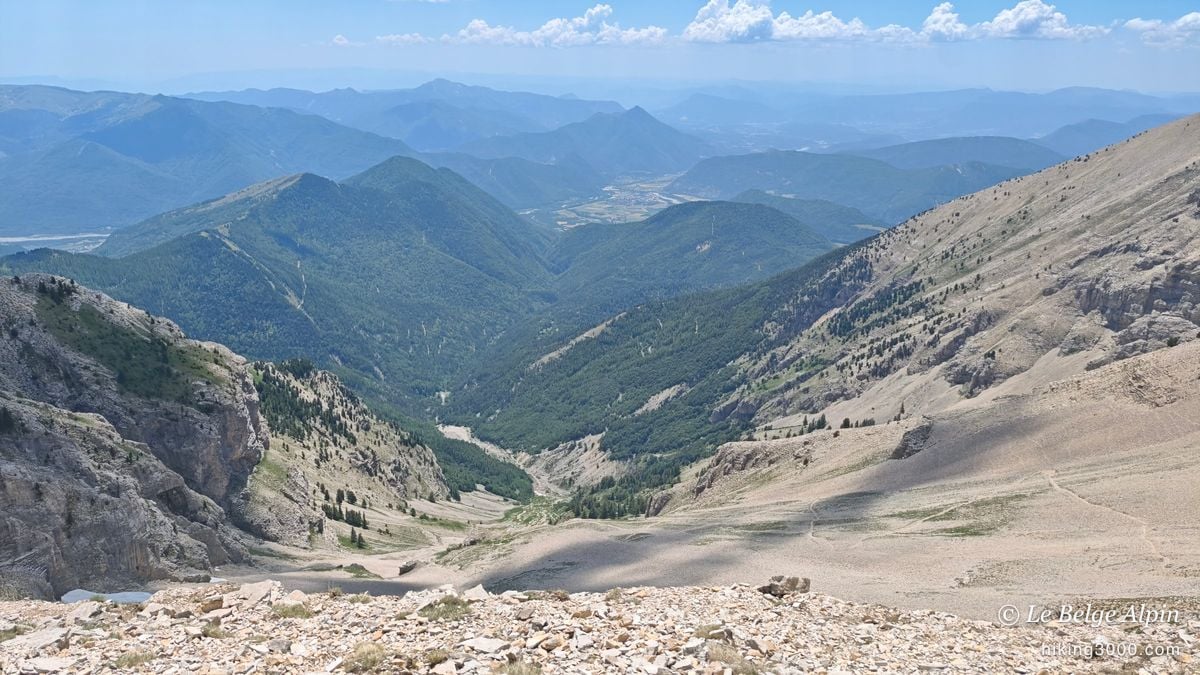
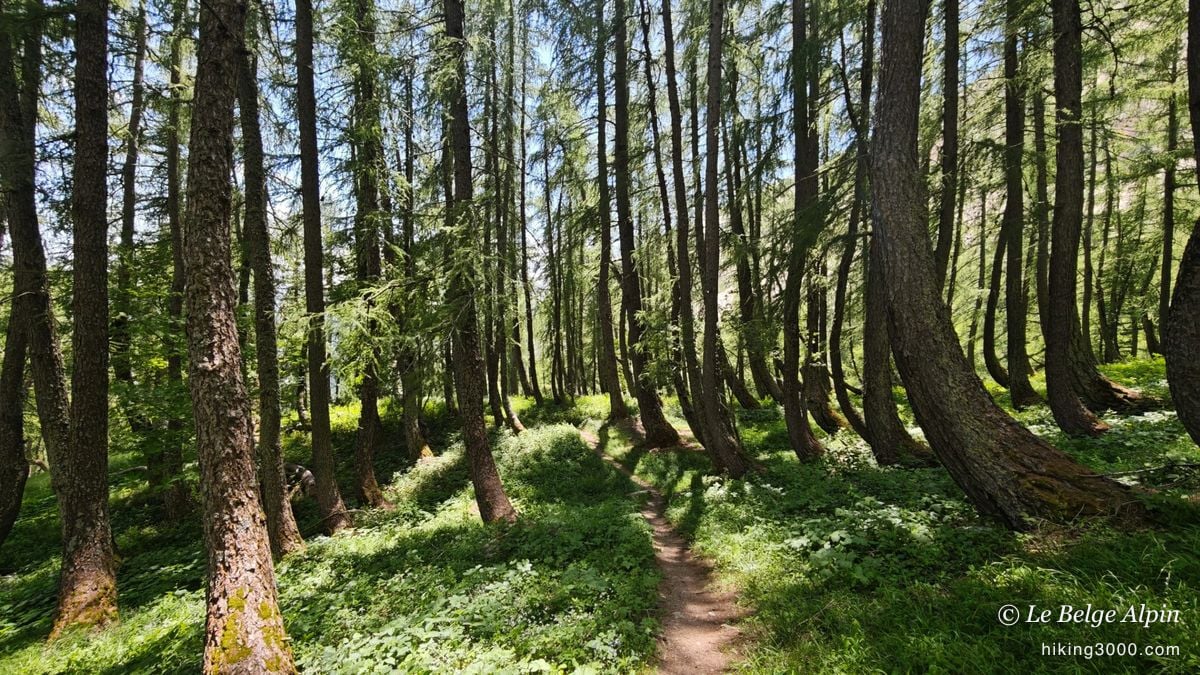
The descent drops back into the combes then into the larch forest, legs well worked by the 1384 m of ascent. For a second hike, Thibault aimed high, and he held on without flinching. That is exactly what I like to pass on: start accessible, then go after summits that leave a mark. This one will stay.
Practical info
14.6 km, 1384 m of ascent, summit at 2709 m. Plan 6h to 7h at a reasonable pace (I did it faster, but it is a big day). Most of the ascent is packed into about 4.5 km, so it climbs very hard. Good mountain boots, poles, and early in the season crampons + ice axe are mandatory for the summit snowfield.
This route up the Combe d’Aurouze and Combe de Mai (from Montmaur) is clearly harder and wilder than the tourist route on the plateau side. Carry plenty of water in hot weather. For snow and conditions, call the Dévoluy Tourist Office before setting off. And if the snow is still there without the right gear, turn back: a retreat is always the smart option.
Practical info
Starting point
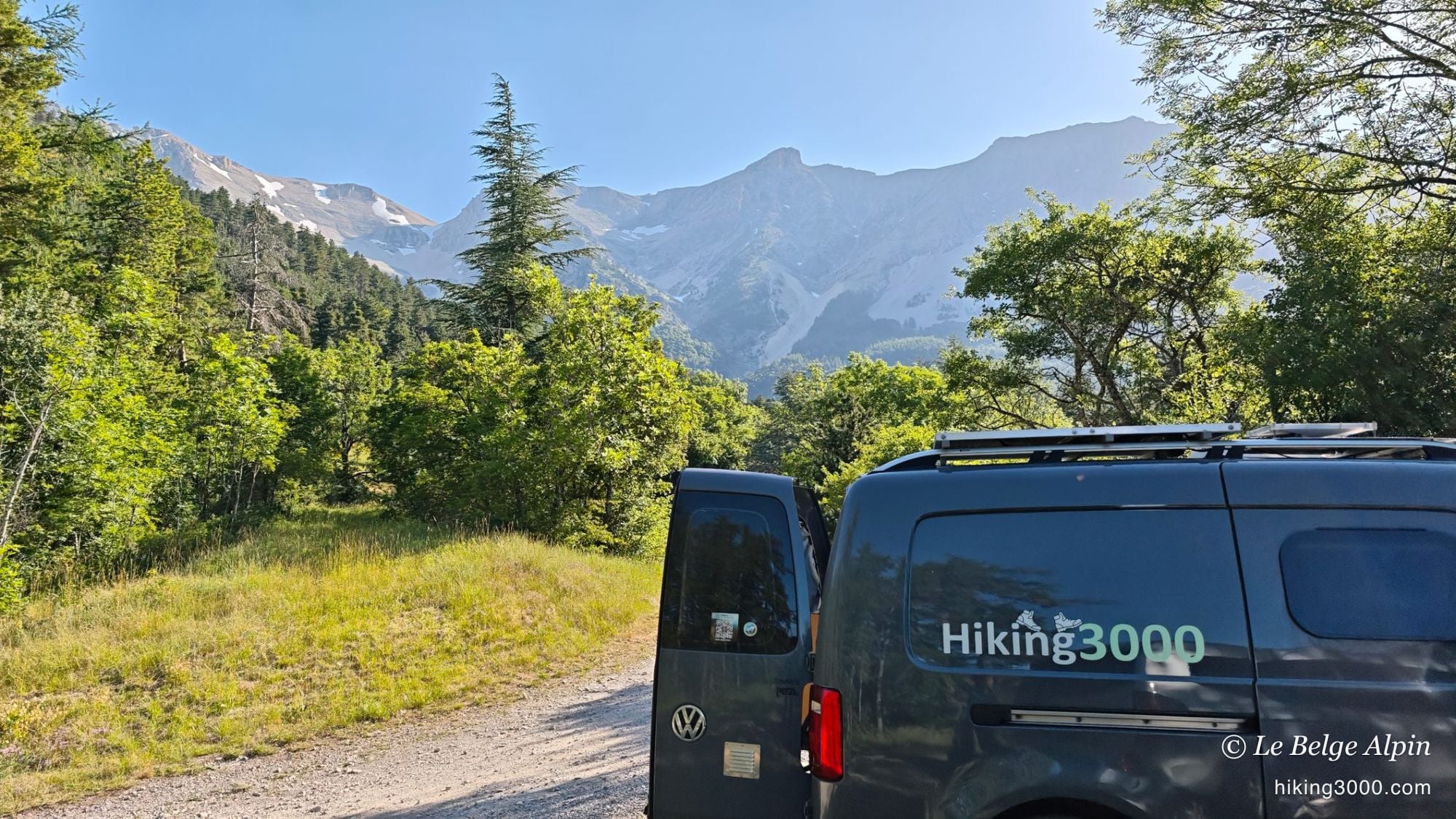
From Gap, reach Montmaur then the hamlet and track climbing toward the Combe d'Aurouze (around 1366 m). This is the wild south flank of Pic de Bure, not to be confused with the tourist access on the plateau and observatory side. Mountain road, last stretch on a track.
GPX track
Import the GPS track into your watch or app (Garmin Connect, Komoot, Gaia GPS, Iphigenie...).
Sign in to downloadGarmin track
Partial GPS track
My Garmin track shows 3h26 moving, but that was a good pace and with a snow section. For a full day with breaks, the summit and care on the snow, plan more like 6h to 7h.
Gallery
26 photos, click to enlarge
Video
A few shots from the outing
Weather, Le Dévoluy
Conditions and forecasts for the itinerary
In the mountains, conditions change fast. A thunderstorm can become dangerous, fog disorients, residual snow slows every step. Before leaving, check the bulletins, plan a stable weather window, and when in doubt, call the tourist office or the local guides office.
Learn to read mountain weather →Questions fréquentes
Do you need crampons and an ice axe on this route?
+
Early in the season, yes. In mid-June a large steep snowfield remained below the summit: without crampons and an ice axe, it is a no, and we saw people turn back for lack of gear. Later in summer the snow melts and the problem disappears. Check the snow conditions with the Dévoluy Tourist Office before setting off.
How does it differ from the tourist route up Pic de Bure?
+
The classic route climbs from the plateau side, more rolling, near the observatory. Here I took the Combe d'Aurouze and Combe de Mai from Montmaur, on the south flank: much steeper (1384 m of ascent, most of it over 4.5 km), wilder, and almost deserted. Harder, but far more beautiful.
Is it suitable for a beginner hiker?
+
Honestly, no, not by this flank. I did it with a friend on only his second hike ever, and he did great, but it was a big day with snow and steep ascent. To discover Pic de Bure gently, the tourist route is better, outside the snowy period.
What are the big antennas at the top?
+
It is the Plateau de Bure observatory (NOEMA, run by IRAM), a millimetre radio interferometer among the most powerful in Europe. Its dishes probe the cold, distant universe (gas clouds, the formation of stars and galaxies). The site is not open to the public and is reached by a vertiginous cable car.