
Pillar, Read a hike sheet
Alpine hike ratings: the E/T/R scale decoded
The FFRandonnée Effort/Technical difficulty/Risk system explained by Le Belge Alpin. How to read a hike sheet before leaving and choose a route that matches your level.
Hi, mountain people, it’s David, Le Belge Alpin. Many of you ask how to judge the difficulty of a hike before committing to it. Here’s the method I use: the FFRandonnée grading system, developed with the French Ministry of Sports, built on three independent criteria, effort, technical difficulty, and risk. It was designed to help you pick a route that actually matches your level, especially if you’re starting out.
Level 1 (0 to 25): Easy. The hike is accessible and asks for no real physical effort. Fine for beginners or anyone looking for a quiet walk.
Level 2 (25 to 50): Fairly easy. Minimal physical difficulty, only light effort required. Good for occasional hikers or for a pleasant outing without real challenge.
Level 3 (50 to 75): Moderately demanding. Moderate effort needed. The route may include steeper or longer sections, but the physical load stays reasonable and manageable for most experienced hikers.
Level 4 (75 to 100): Fairly hard. Sustained effort and significant physical difficulty. This level is for well-trained hikers ready to face more demanding terrain and serious elevation gain.
Level 5 (100 and above): Hard. These hikes require serious physical preparation and are very demanding. They often include technical terrain, major elevation, and tough conditions. For experienced, well-prepared hikers only.
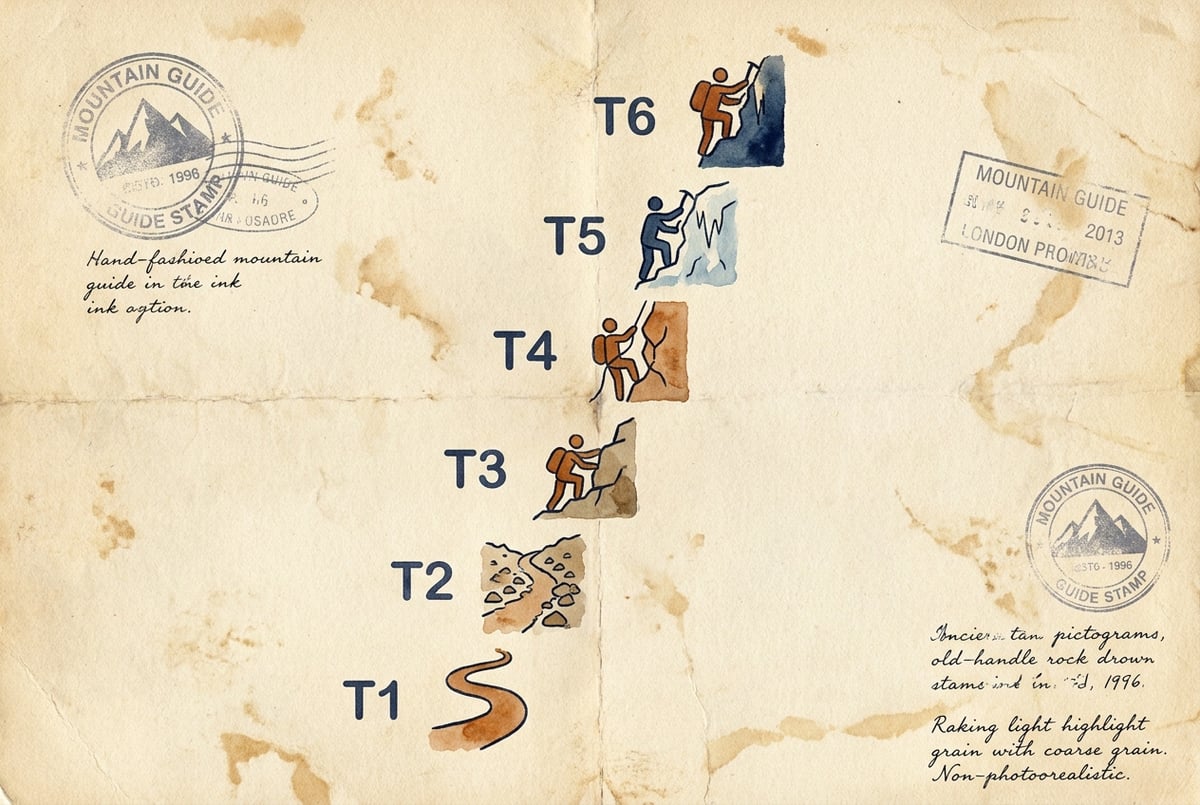
Level 1: Flat and even terrain. Smooth, easy ground with no notable obstacles. Good for beginners or for a relaxed walk.
Level 2: Low obstacles (under 10 cm). Generally easy ground with a few small obstacles to step over, nothing complex. Fine for anyone looking for a quiet outing with minor challenges.
Level 3: Knee-high obstacles. The terrain becomes more irregular, with obstacles that take a bit more effort to cross. Surfaces may be less grippy but stay accessible to most experienced hikers.
Level 4: Hip-high obstacles. Very uneven terrain, sometimes with larger obstacles. Trekking poles help with balance and stability. This level is for hikers used to tougher conditions.
Level 5: High, tricky obstacles. Extremely uneven terrain with obstacles that require the use of hands to cross. The hike may include technical passages where real climbing technique is needed. For experienced, well-prepared hikers.
Level 1: Very low or no risk. Terrain is safe even in case of a fall. Ideal conditions for beginners, with little or no hiking-related danger.
Level 2: Risk of minor injury. Terrain may have small obstacles or uneven surfaces that could cause sprains or mild injuries in case of a fall. Overall risk stays relatively low.
Level 3: Risk of serious injury. Terrain is more demanding and includes obstacles or conditions that raise the risk of fractures or other serious injuries in case of a fall. Good preparation and hiking skills are needed.
Level 4: Dangerous passage. Terrain carries real risk of serious or fatal injury. Expect exposed sections, steep slopes, or technical obstacles. Thorough preparation and advanced skills are essential to minimise the danger.
Level 5: Very dangerous. The hike carries very high risk, where a fall can be fatal. Terrain is extremely exposed and technical, requiring climbing or alpinism expertise. For very experienced, well-equipped hikers only.
On every hike sheet you’ll find these 3 ratings written as:
5/4/1
5: Effort
4: Technical difficulty
1: Risk level
Km-effort: the metric that merges distance and elevation
Every hike sheet also shows a more telling index than raw distance: km-effort. This is the FFRandonnée metric that expresses the combined physical demand of an outing in a single number.
The formula is simple: km-effort = distance (km) + positive elevation gain (m) / 100.
In practice, 100 metres of positive elevation count as 1 extra kilometre of flat ground. A 20 km hike with 1500 m of elevation therefore comes out at 35 km-effort. It lets you honestly compare two very different outings: a flat 30 km route and a 15 km loop with 1500 m of climbing both score 30 km-effort, and both ask for a full day on your feet.
To locate yourself:
- Under 15: easy walk, accessible to all.
- 15 to 25: sporty half-day, proper shoes recommended.
- 25 to 35: a real hiking day, some training helps.
- 35 to 45: demanding, physical preparation required.
- Over 45: committing, reserved for experienced, well-prepared hikers.
The widget on each sheet calculates this value automatically from distance and elevation. No need to look for it, it’s displayed next to the other metrics.
Going further: see also our gear guide sorted by rating and our tips for reading mountain weather before leaving. Back to the full preparation guide.