
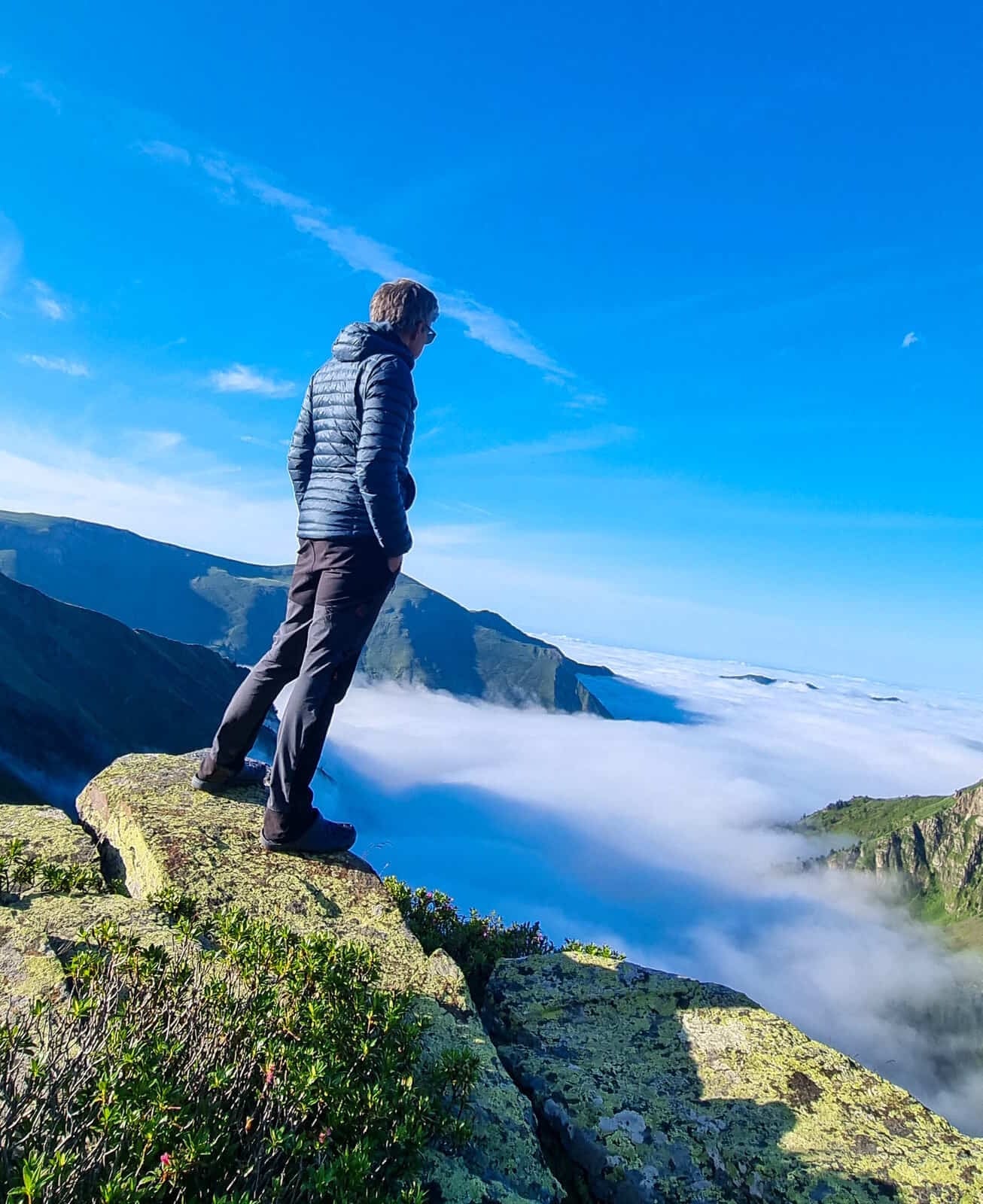
I’m David, Le Belge Alpin. For a few years now, I’ve been sharing my hikes here, mostly solo, in the Alps, the Pyrenees, a bit elsewhere, and also in Belgium because that’s where I live and work most of the year. Until this week, the site was running on Zoho Sites. It got the job done, but I was hitting a ceiling. Today you’re reading the full rebuild.
This article is a guided tour. What has changed, what you can do here, and a frank note on artificial intelligence, because the question is going to come up.
Why I rebuilt the site
Zoho is a good tool to get started. You don’t pay much, you have a visual editor, you publish an article without headaches. But after a while, you hit the limits. No user accounts. No real map. No collections. No structured field reports. No way to imagine what comes next.
And I had a real project in mind. Not a content factory like AllTrails, not a platform pushing for volume. Something more artisan, more committed, closer to a hike account than a quick guide. A place where a hiker can come looking for a documented route, read a trip story, see the photos, download the track, and possibly leave a field report if something has changed on the ground.
For that, I had to step outside the box.
What you can do now
Without an account
All the content stays readable. Hike sheets, photos, narrative, metrics, visible GPS track, range, ideal season, safety advice, public field reports left by others. You can also browse the interactive map that gathers every documented outing, filter by grading, by country, by range.
The hike list is filterable by region, by commitment, by year. The pillars /en/belgium and /en/via-ferrata gather the specific outings.
With an account
Creating an account takes thirty seconds. No password: you get a magic link by email, click it, done. Then you’re asked to confirm a short safety disclaimer (the mountain remains the mountain, nobody hikes it for you), and you’re in.
An account unlocks:
- GPX track downloads when I share them. Some hikes don’t have one, either because they’re too obvious on an IGN map, or because the official track stays with the managing body (FFRando, CAB, etc.).
- Precise start coordinates and Waze/Google Maps links, to avoid publishing online the unofficial parking spots that end up bothering locals.
- Mark a hike as done. Your profile tracks your collection. After five validated hikes, the system recognises you as a confirmed user and your field reports/comments go live without prior moderation.
- Leave a field report when something has changed: damaged passage, closed hut, objective danger, recent news. It’s a different system from a classic comment, more structured, more useful to the next hiker.
- Comment on articles. Soft but real moderation.
- Manage your profile: handle, avatar, what you make public or private, your level, your favourite tags. And GDPR is taken seriously: you can export all your data in one click, or request full deletion with a seven-day grace period.
Nothing is forced. You can stay completely anonymous, tick no public field, and use the site as a silent hiker. That’s the default behaviour.
A word on artificial intelligence
The question will come, might as well get ahead of it.
I didn’t use AI to write this site. Every hike account you read here comes from me, from my trail notes, my memory, my photos. I tell my own outings. The emotions, the mistakes, the descriptions of places, the practical advice, it’s lived experience, not a synthesis. AI does proofreading, fixes a typo, suggests breaking an overlong sentence, rereads the technical frontmatter. It’s a copy editor, not a writer.
On the other hand, I used AI to code. Heavily. This site runs on Astro, on a server I manage, with a Supabase database for authentication, S3 storage at Scaleway for the photos, a CDN, automated deploy scripts, monitoring. I’m not a trained developer, I’m the CEO of a Belgian VoIP telecoms company, with a former sysadmin background. But I’ve been working daily with these tools for six months, and it no longer has much to do with “I asked ChatGPT to build me a blog”.
This site is the output of an architecture I’ve patiently built to frame AI and get it to produce clean, maintainable, secure code. Domain-specialised agents, documented skills, per-project quality rules, a persistent memory that avoids repeating the same explanations from one session to the next, guardrails to prevent drifts. AI does the bulk of the code writing, but I’m the one deciding the plan, validating each brick, testing in real conditions, setting priorities. We work as a team, not as dictation.
My strengths are my years spent plugging APIs together, automating flows, debugging production infrastructure. Everything around code, I know how to do. What AI brings is execution speed, consistency of conventions, and the fact that it never gets tired of commenting and documenting what it produces. Without this team, I would never have shipped a site of this size, solo, after work, in a few weeks.
It’s a slightly less common use than the “I write my site with AI” trend. More solarpunk, if I may. AI does the invisible work, the hundreds of lines of configuration, database schemas, integration tests, SSR routes. Me, I focus on what matters: the hikes, the narrative, the photos, the editorial decisions, the soul of the site.
I also apply this methodology to my pro projects at Digitis, where several applications have shipped in recent months with the same approach. Everyone draws the line where they want. Mine is here, and I try to be as transparent as possible about the how.
What comes next
The site is alive now, but it’s not finished, it never really will be. In the coming weeks:
- More articles. I have a backlog. Pyrenees hikes I haven’t documented yet, recent Belgian via ferratas, winter outings if the season allows.
- Richer captions on older photo galleries. Some are still too generic.
- Finer weather widgets on articles. For now, the daily fallback does the job.
- A public wishlist system for users who want to share what they’d like to do.
- An English version was on the maybe list. You’re reading it. The site is now fully bilingual, although articles keep their French structure and feel.
And this journal will stay open to tell what happens behind the scenes when it’s worth it.
If you want to follow along, create an account, bookmark the site, come back once in a while. If you spot a bug or have an idea, send me a note. If you want to support without spending anything, share a page that helped you.
See you on a trail.