
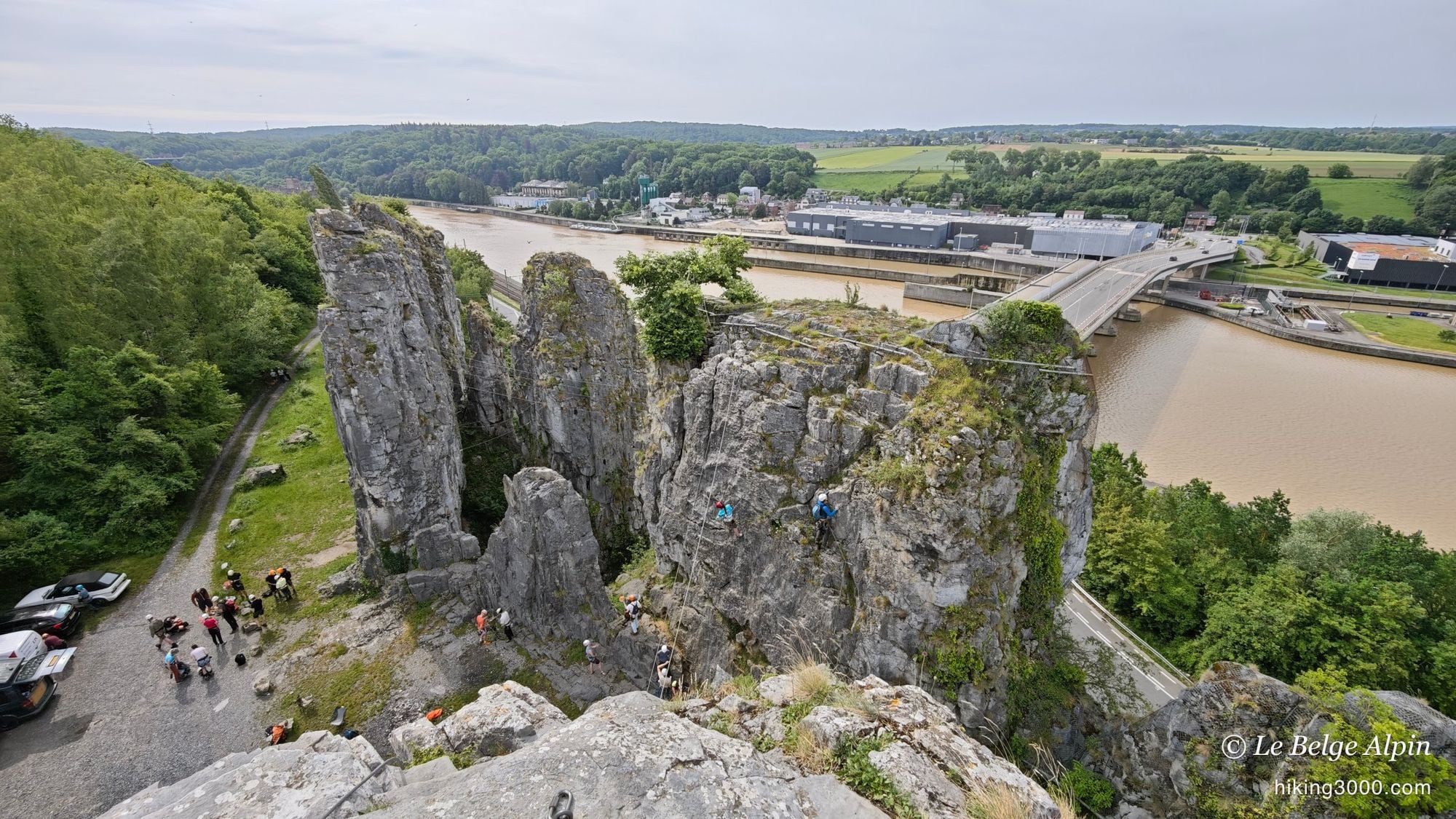
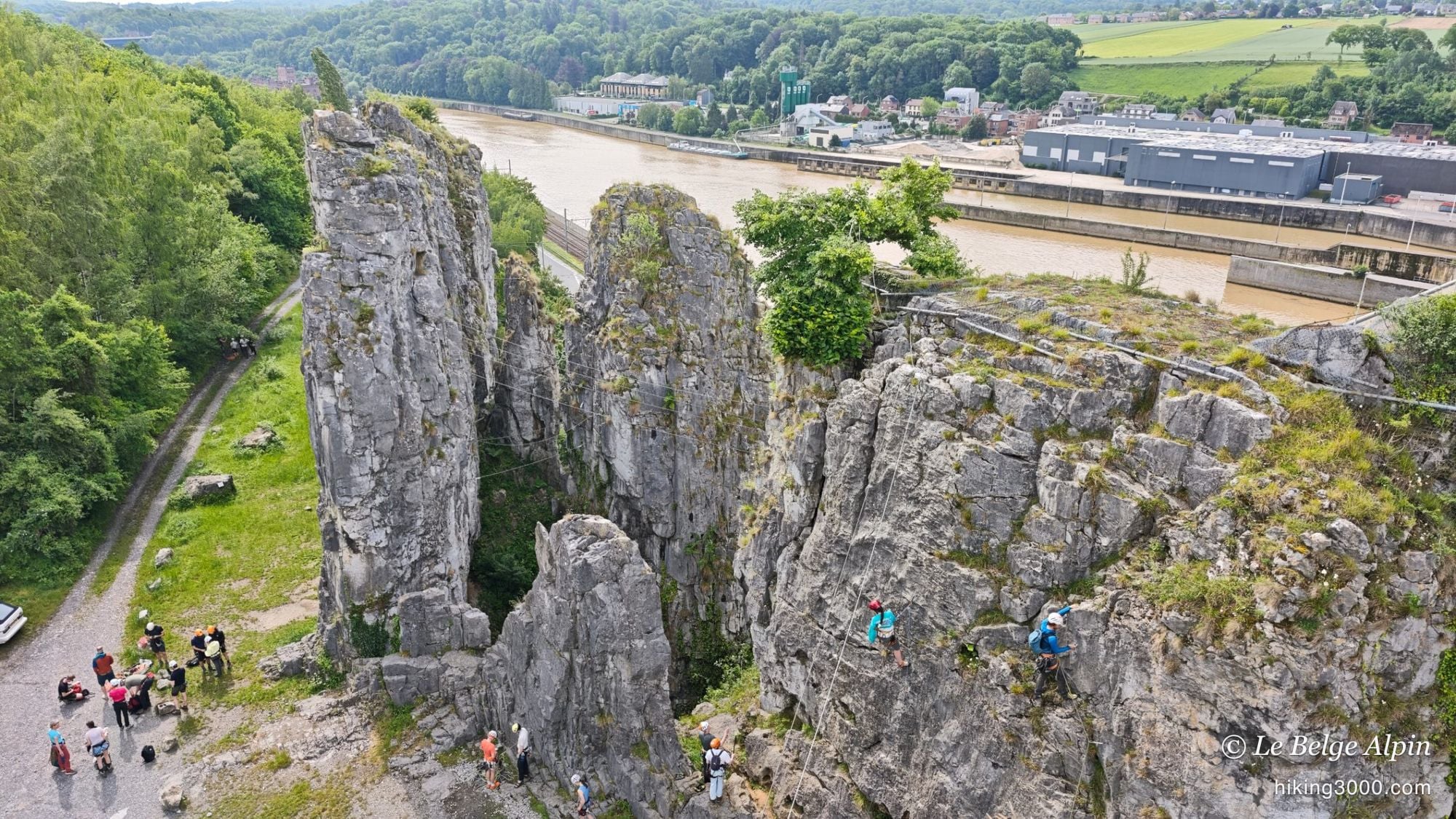
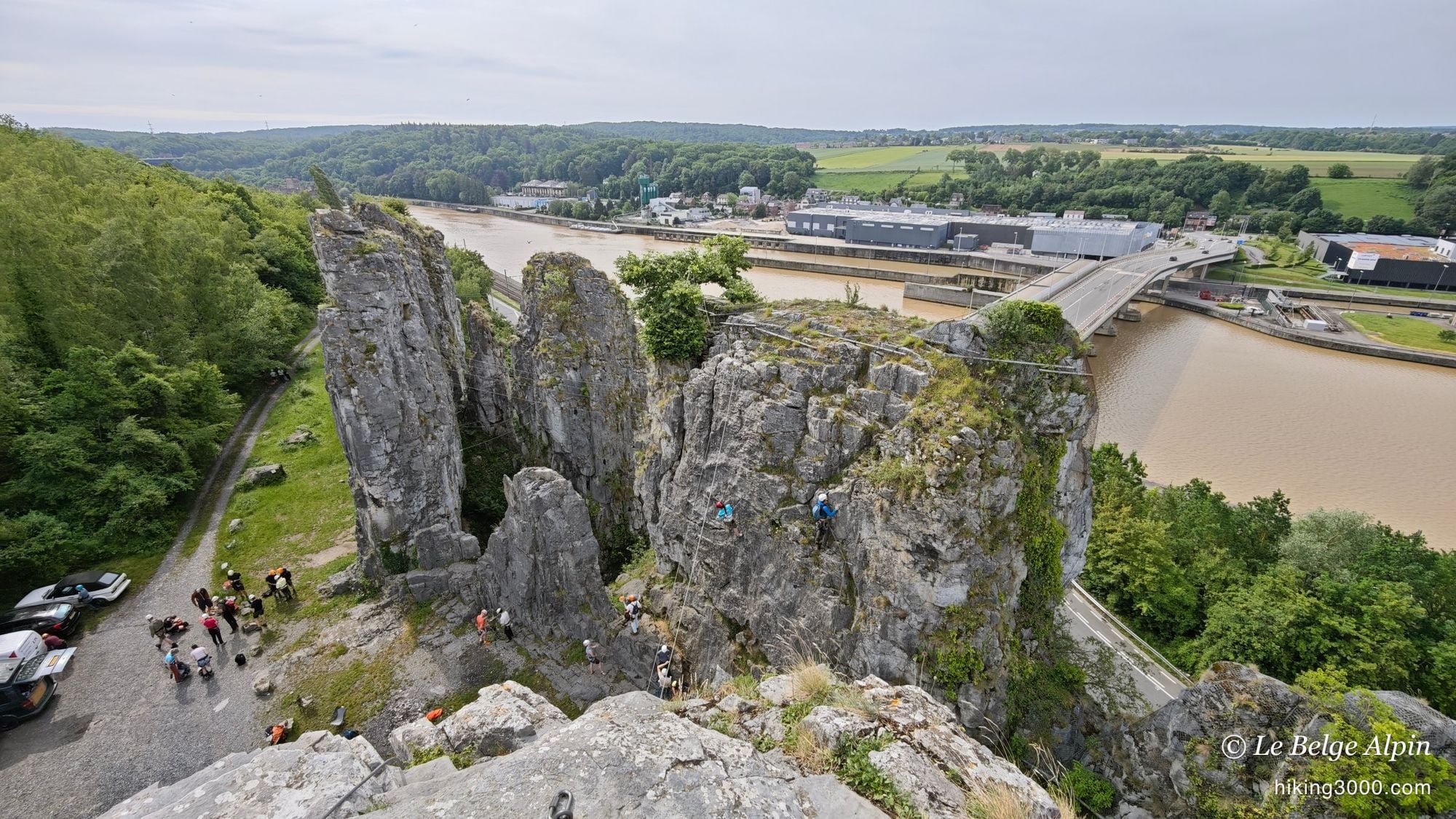
On the bank of the Meuse, squeezed between the main road and the Grands Malades bridge, this Namur via ferrata is no looker on the scenery front. But the limestone is superb and the route is the most varied in the country: zipline, monkey bridges, Nepalese bridges, knotted rope and a mandatory rappel exit that filters out the visitors.
I had launched the site three or four years ago, and that whole time this via ferrata sat on my list without me getting back to it. This Sunday I finally made up my mind to drive down to Namur and do it again, years after my first time.
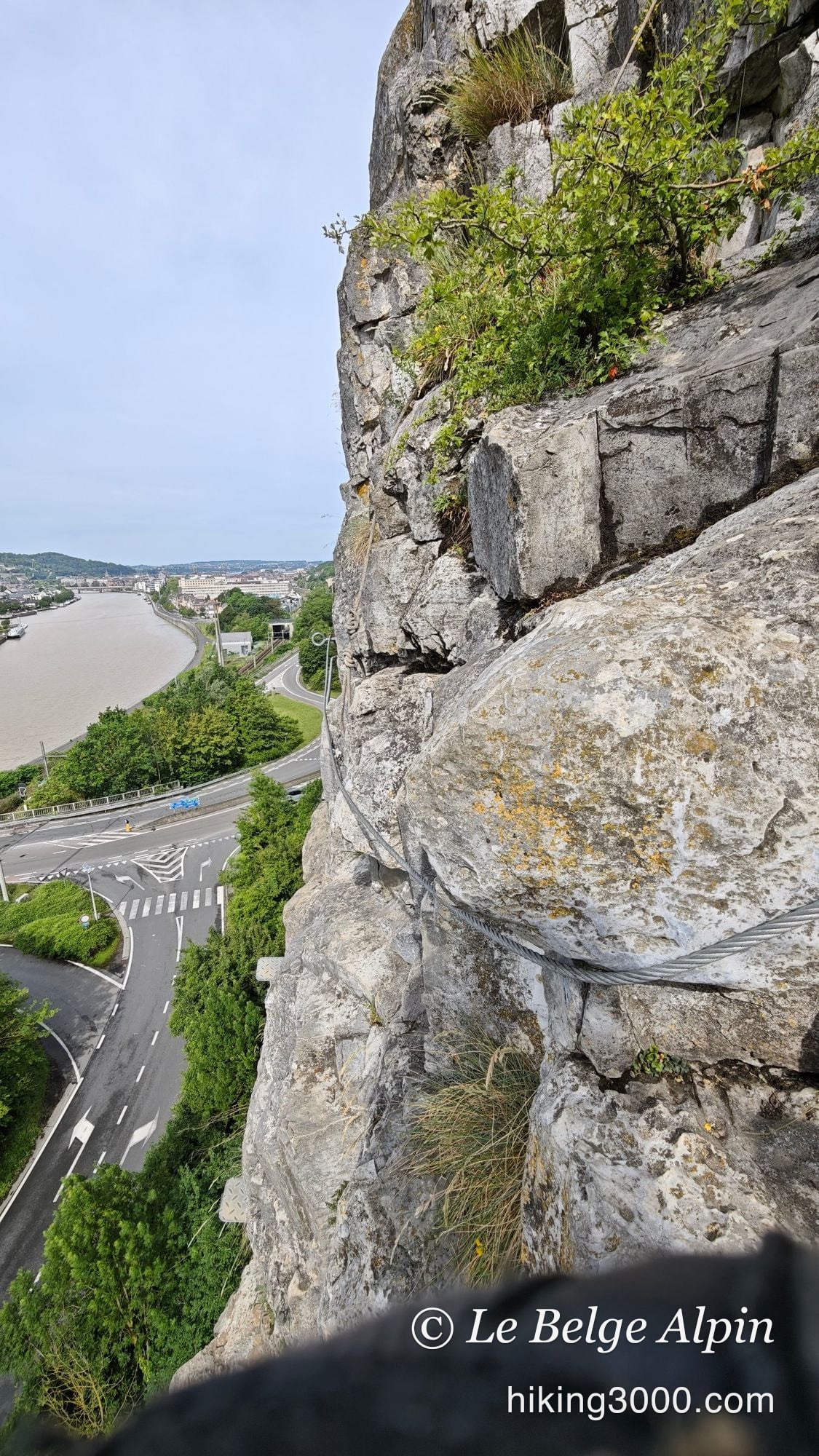
Let us be honest about the setting: you are wedged between a main road, the Grands Malades bridge and the Meuse. This is not the wild backdrop of an alpine hike, far from it. But once your nose is against the rock, you quickly forget the road: the limestone is genuinely beautiful, and the route more than makes up for the urban surroundings.
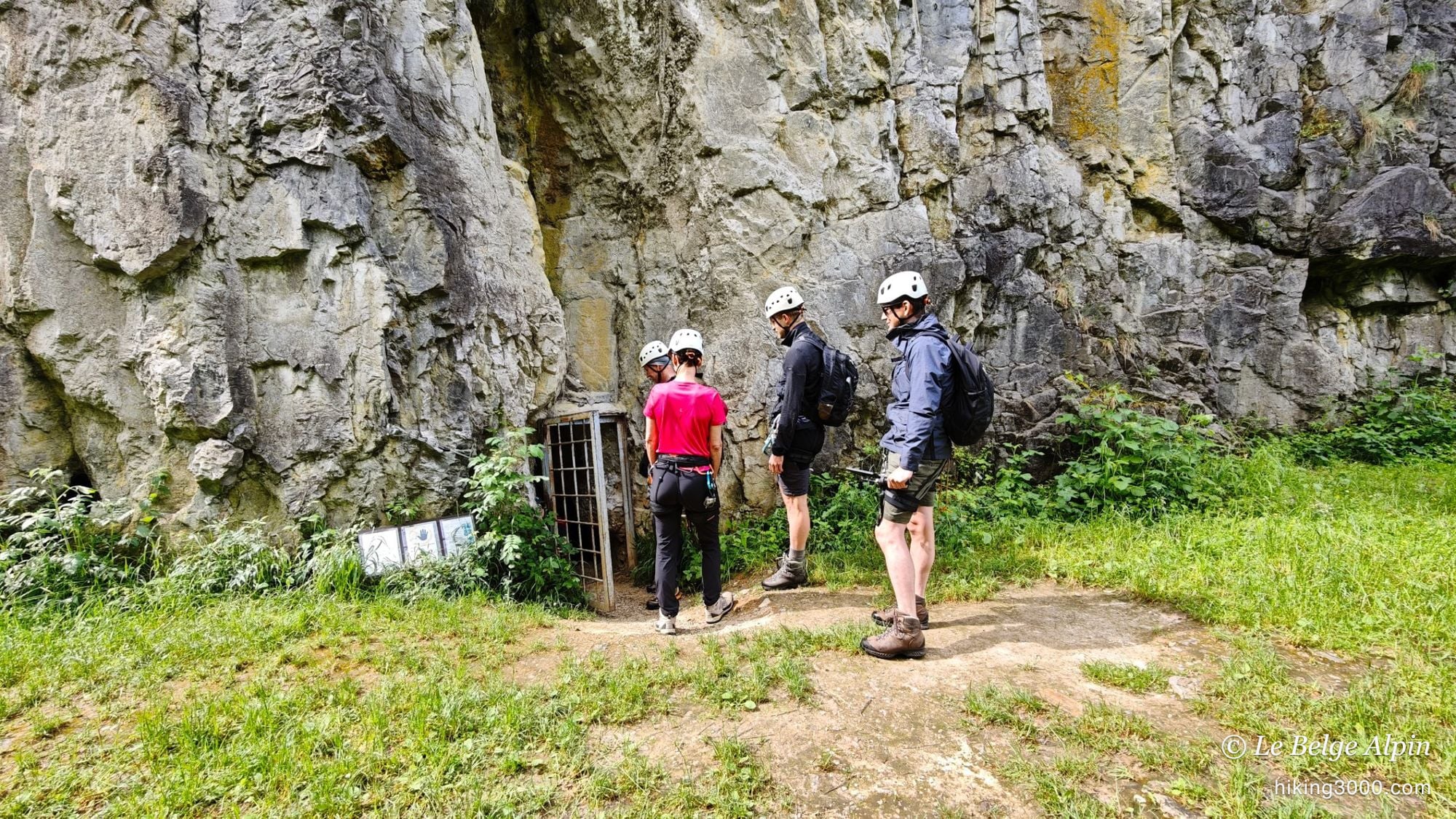
One access detail not to overlook before coming: the starting cave (the Trou des Charrues) is normally closed by a combination padlock. And that code changes regularly, on purpose. So you have to request it ahead of time from the site manager, the Société Spéléo de Namur, and be a federated, insured climber. The day I went the padlock was not in place and I walked straight in, but do not count on that: get the current code before making the trip.
The most complete route in Belgium
We are not at the level of Fond des Cris and its ED in the second part, let us not kid ourselves. But at grade D there is still plenty to make your arms work: quite a few tilted walls, sections where you climb down, traverses. You are often pulling hard.
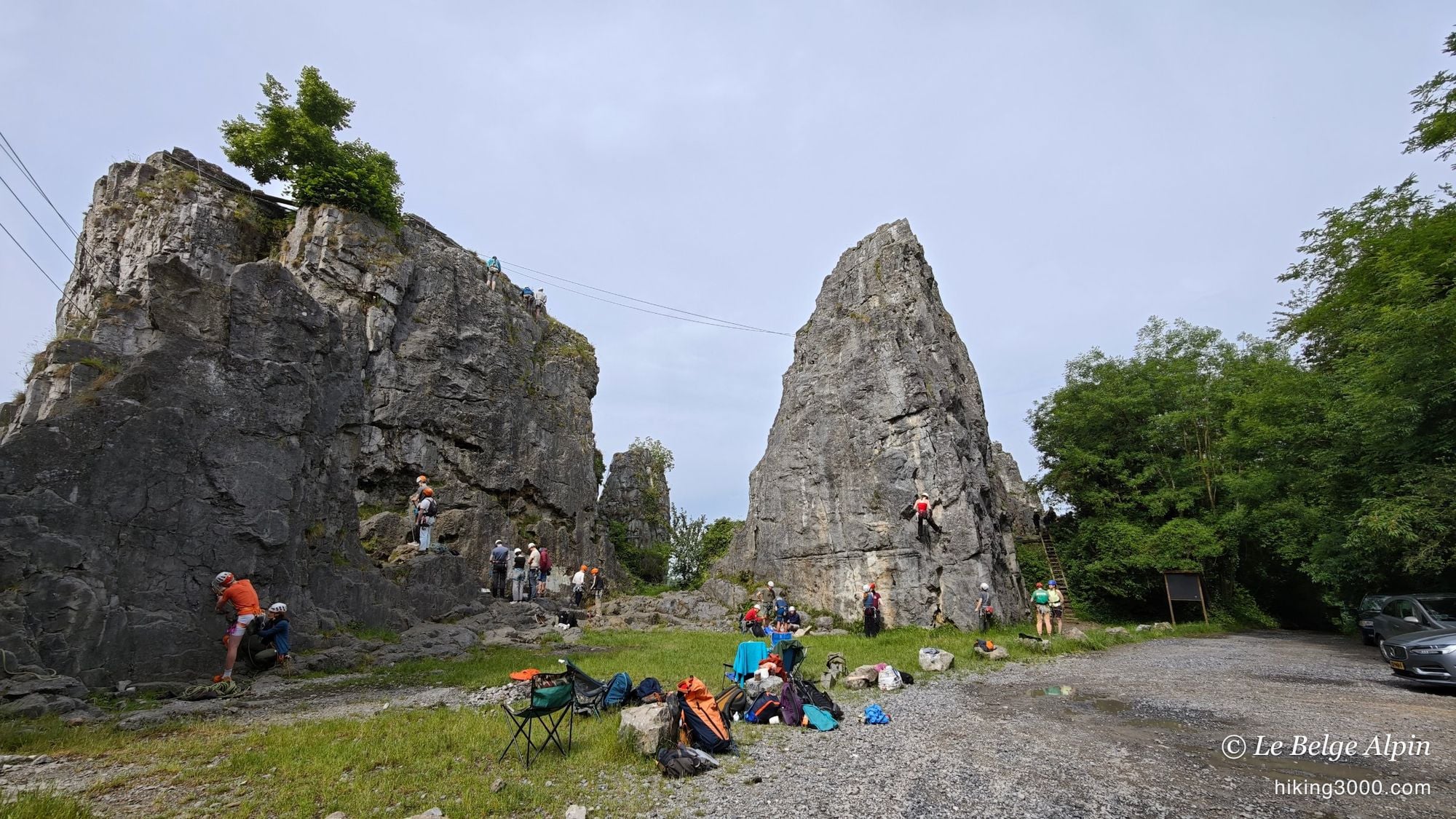
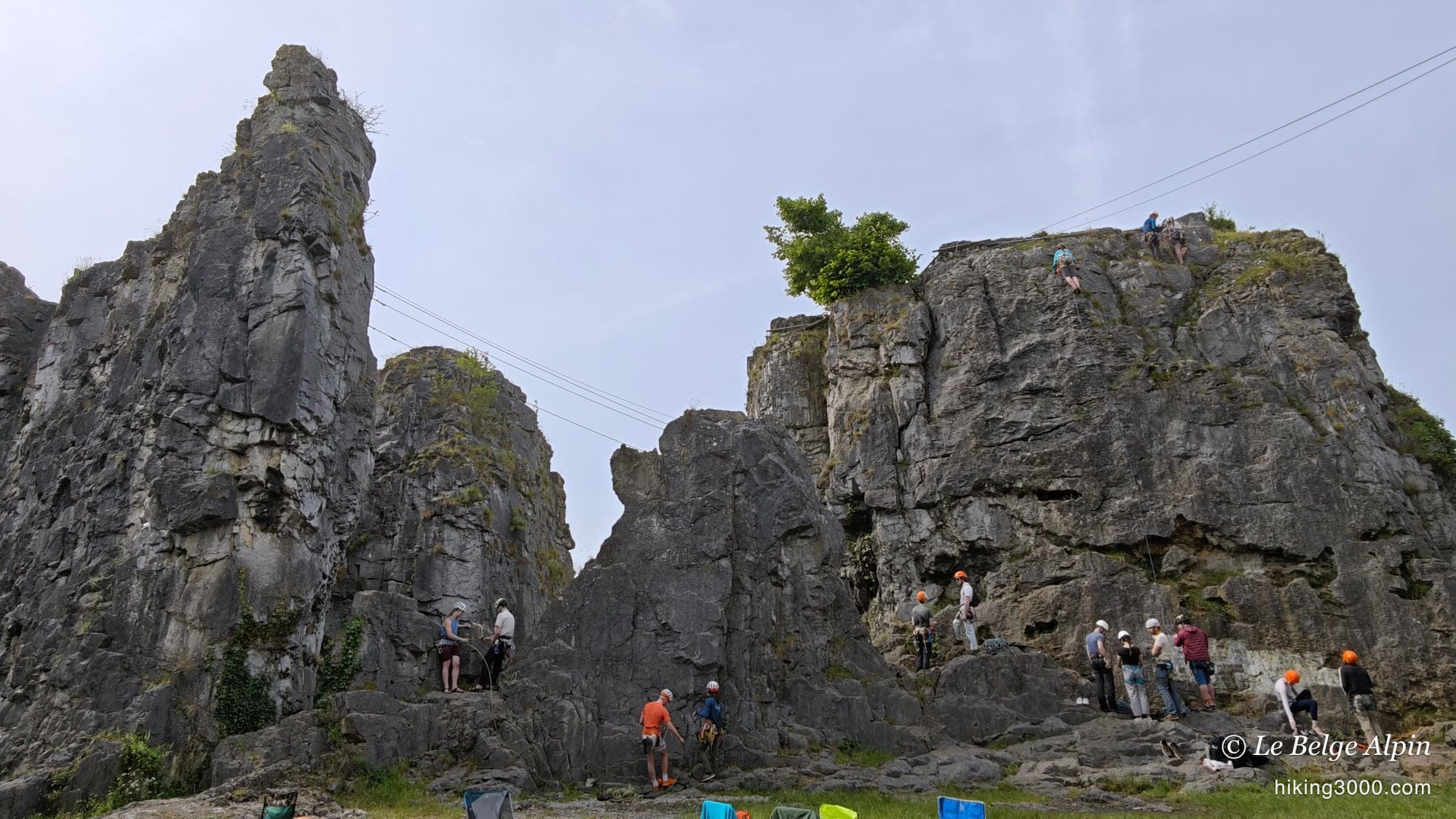
What makes this via ferrata endearing is its variety. It starts through a cave, then strings together pretty much everything you can find in a via ferrata: monkey bridges, two Nepalese bridges, a knotted rope and a zipline. For such a short route (around 200 metres), it is the most complete in the country. You touch the whole toolkit in one morning.
Special mention for the knotted rope, which you have to let yourself down on. For anyone who has never done it, it is a peculiar little moment: no more rungs, no more cable in hand, just a rope and its spaced knots to wedge your feet and hands into. You have to accept trusting it and let yourself go into the void while holding the knots. Mine was recent that day, but that is not always guaranteed on this kind of fixed gear exposed to the seasons: take a look and feel it before committing to it.
The rappel exit, the real trap
Here is the point you have to be very clear about, because I got caught out: the only way out of this via ferrata is a rappel of fifteen to twenty metres. No bypass path once you are at the top. The CAB requires a 40-metre rope and a descender, and you need to master the rappel technique.
The joke of the day was that the person who had told me about the via had said you could go and drop the rope at the top beforehand, to avoid lugging it in your pack. So I left without it. Except that once at the summit, I saw there was no path to get back down and drop anything. I found myself well and truly stuck.
Lucky for me it was Sunday and there were people about. I was able to come down on a neighbour’s rappel rope, with a figure eight, without even a cord to rig a prusik backup. In short: do not take me as an example. Come with your 40-metre rope, your descender, and something to back yourself up. The CAB always recommends a bottom belay or a self-belay system, and that day I understood exactly why.
Zipline: the right pulley, not a fast one
A quick gear clarification, because I had a doubt myself and I checked the official CAB instruction. For the zipline, you want a double pulley, not a fast pulley. The Club Alpin Belge is adamant on that, and it lends one out (the famous yellow double pulley), to be returned to the secretariat after use.
You attach it to the carrier cable with a sling tied to your belay loop, keep the two lanyard carabiners on the lifeline cable with opposite gates, and you slow yourself if needed by pulling on those carabiners, never by grabbing the cables. The zipline is short but it goes fast: brake a little before the end, otherwise you risk smacking your knees on arrival.
It is a via ferrata I genuinely recommend, provided you come properly equipped and know how to handle a rappel. Short, dense and varied: your arms will get their share. More info in my complete guide to via ferratas in Belgium.
Gallery
6 photos, click to enlarge
Information
Access +
The route starts through a cave (the Trou des Charrues) closed by a combination padlock whose code changes regularly. You must request it before each visit from the site manager, the Société Spéléologique de Namur (grands-malades@ssn-speleo-namur.be), stating the group name, the person in charge, the date and the number of participants; an access agreement must be signed. You need to be a federated and insured climber (CAB member or equivalent federation). Small parking for about 8 cars at the foot of the rock, on the left of the gravel track (behind the pharmacy, route de Hannut in Bouge). If it is full, park further out without disturbing residents.
Weather and conditions, Namur +
Weather, the first safety check
Wet cables are treacherous. Some routes close in winter or during nesting season, always check official information before heading out.
Video
Before heading out on a via ferrata
Technical learning is less complex than climbing, but this activity carries risks that should not be underestimated. If you are a beginner, I strongly recommend going out the first few times with experienced people or paying for guidance (clubs in Belgium or a mountain guide).
I also invite you to check a friend's forum on the subject:
Learn about via ferrata, franceviaferrata.frFeel free to contact me if I am in Belgium to climb together.
Le Belge Alpin
More about David →Questions fréquentes
What level do you need for the Grands Malades via ferrata?
+
Advanced level. The route is graded D: lots of tilted walls, traverses and sections where you pull on your arms. It is not the ED of Fond des Cris, but it is clearly not a first via ferrata. You need good fitness, strength in the arms and no fear of heights.
Why do you need a rope and rappel skills?
+
Because the only way out of this via ferrata is a rappel of fifteen to twenty metres. There is no bypass path once you are at the top. The Club Alpin Belge requires a 40-metre rope and a descender. If you do not master rappelling, do not go solo: there is no way around it.
Which pulley for the zipline?
+
A double pulley (the CAB lends one, yellow, to be returned to the secretariat), with two safety carabiners and a sling tied to your belay loop. Definitely not a fast pulley: the official CAB instruction is explicit on that. You slow yourself by pulling on the lanyard carabiners, never by gripping the cables.
How do you access the site?
+
The start is through a cave (the Trou des Charrues) closed by a combination padlock. The code changes regularly: you must request it before each outing from the site manager, the Société Spéléologique de Namur (grands-malades@ssn-speleo-namur.be), and be a federated, insured climber (CAB or equivalent). The rock is in Bouge, on the bank of the Meuse, just north of the Grands Malades bridge.
How much time should you plan?
+
About 2 hours for the full route. It is short (around 200 metres) but dense: starting cave, monkey bridges, Nepalese bridges, knotted rope, zipline and rappel exit. Add the time to gear up and to set the rappel on top.